


Lakefront properties around Lake Allatoona and Lake Acworth face heavier spider. Mosquito pressure due to shoreline vegetation and standing water. Covenant Pest Services, based in Acworth, GA, treats dock structures and shoreline perimeters with targeted barrier applications, reducing orb-weaver and dock spider webbing while establishing mosquito control zones for safer, more enjoyable outdoor living.
Key Takeaways
- Covenant Pest Services protects Acworth lakefront properties from spiders and mosquitoes year-round.
- Our dock mosquito barrier treatments create customized protection for waterfront outdoor spaces.
- Acworth’s scenic lakefront environment requires specialized pest control solutions for families and businesses.
- Covenant Pest Services delivers fast, effective protection tailored to North Georgia’s local pest challenges.
Why Do Lakefront Docks Attract So Many Spiders?
Wooden pilings, boat lifts, and shoreline brush give spiders exactly what they need: shelter, moisture, and a steady supply of flying insects to eat. Lake Allatoona and Lake Acworth shorelines see far more web-building activity than inland properties across Cobb County. Proximity to open water raises pest activity along docks. Boathouses, turning scenic waterfront views into prime real estate for eight-legged residents.
Warm temperatures, high humidity, and wooded lots surrounding the lake all play a role. These conditions favor both spiders and the mosquitoes that make up much of their diet. A dock with heavy insect traffic almost always develops a matching spider population. Add in Acworth’s humid Piedmont climate and the red clay soil common throughout the area. Shoreline properties end up with near-ideal breeding conditions for pests year-round, not just during peak summer months.
Which Spiders Show Up Most Often on Lake Allatoona Docks?
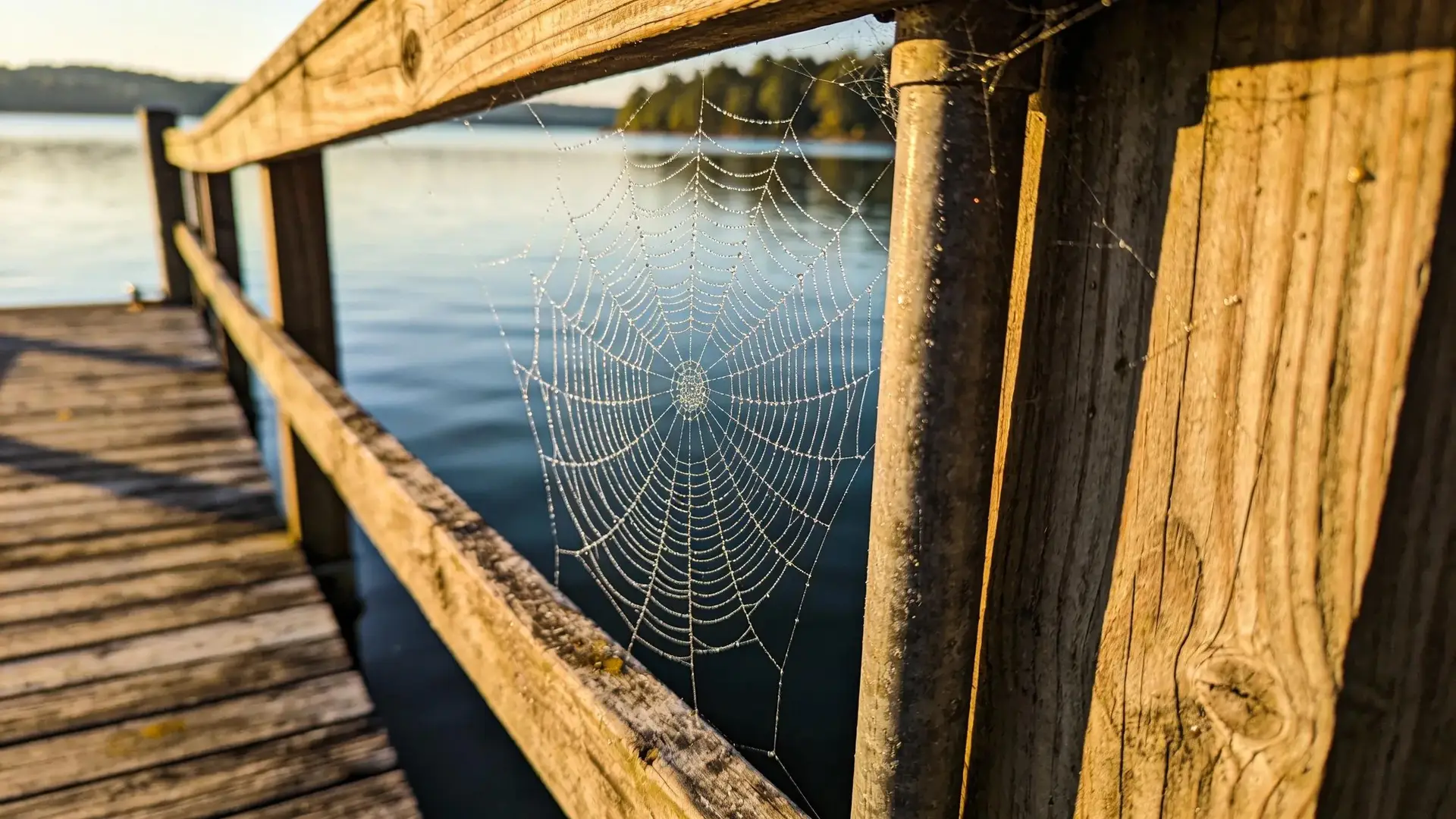
Orb-weavers spin large, visible webs between railings and support beams, often overnight. Dock spiders, larger and faster-moving, tend to hide in crevices near the waterline and dart out when disturbed. Black widows favor dark, undisturbed spaces like storage boxes or the undersides of boat lifts, making regular inspection worthwhile for shoreline homeowners.
Does Mosquito Activity Make Spider Problems Worse?
Yes — mosquitoes drawn to standing water and shoreline vegetation become a food source that keeps spider populations fed and growing near docks. Because Covenant Pest Services operates directly from Acworth, its technicians see this dock-to-shoreline pattern firsthand, not from a distant regional office. That local familiarity shapes how dock spider pest control Acworth GA treatments target both the webs and the insects feeding them.
Not every big spider is a problem; see whether orb weaver spiders are poisonous.
Which Spiders Show Up On Lake Allatoona Docks?
Three different creatures usually hide behind that one dockside complaint. Acworth homeowners spot a leggy visitor and call it a spider. The culprit could be a harvestman, a cellar spider, or even a crane fly. Each looks similar at a glance. Each behaves very differently once it settles onto a dock post or boat cover.
Warm temperatures, high humidity, and the wooded shoreline around Acworth’s lakes create ideal conditions for these pests to multiply. Spiders show up alongside mosquitoes and other seasonal invaders drawn to the same damp, shaded environment. That combination makes dock spider pest control in Acworth, GA a recurring need for waterfront property owners rather than an occasional nuisance.
Are those long-legged spiders on my dock actually dangerous?
Most of the long-legged creatures scurrying across dock boards or hanging in corner webs are harmless. Homeowners commonly find them near garages, storage boxes, and shaded dock corners where moisture lingers. Identifying which type has moved in matters more for peace of mind than for safety.
Cellar spiders differ from the other two lookalikes in one key way: they’re genuine spiders, built with long, thin legs and true spinning organs. Seeing them indoors? Read why daddy long legs pile up in basements. Harvestmen, despite the resemblance, aren’t spiders at all. That distinction matters when planning treatment, since spider dewebbing around Lake Allatoona targets actual web-builders, not wandering harvestmen passing through. A trained technician sorts out which species has claimed a dock before recommending next steps.
Why Does Acworth’s Lake Climate Fuel Mosquito Swarms?
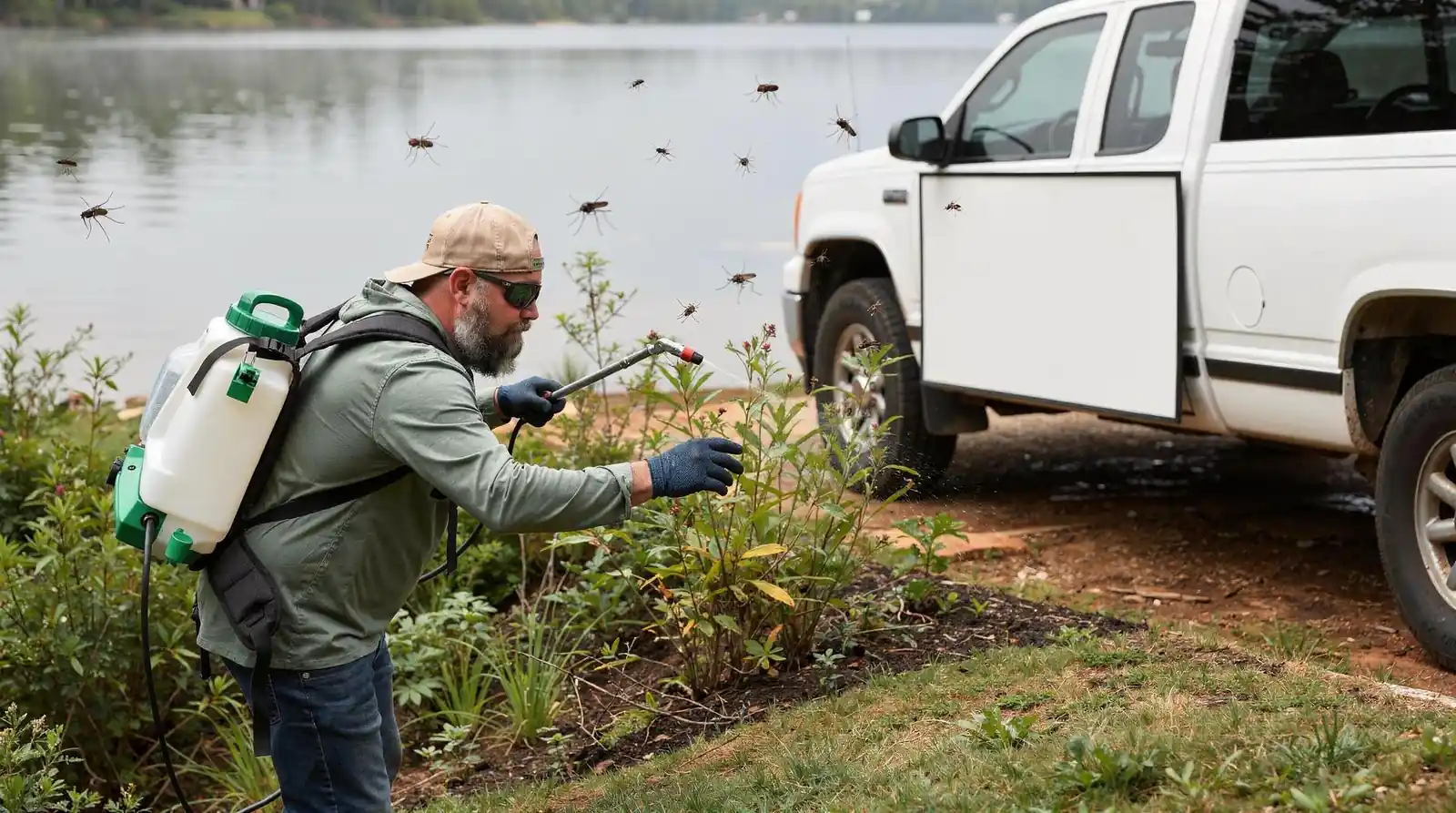
Lake Allatoona and Lake Acworth create a breeding engine that runs from March through October, sustaining mosquito populations across the entire warm season. Humidity off the water combines with consistent heat to produce ideal breeding conditions. Shoreline vegetation gives larvae countless sheltered pockets to develop undisturbed. For homeowners with docks, this means peak boating season overlaps almost exactly with peak mosquito season.
The stakes go beyond itchy bites. Georgia reports West Nile Virus cases every year, according to the Georgia Department of Public Health, which makes lakefront mosquito control in Acworth a health priority rather than a comfort upgrade. A single evening on a dock or patio can expose family members. Guests to bites carrying real disease risk, not just discomfort.
What makes lakefront properties worse than inland yards?
Standing water near shorelines, boat storage areas, and dock pilings gives mosquitoes far more breeding surface than a typical inland lot offers. Warm, moist air trapped near the water line keeps larvae developing even during short dry spells. Properties within a few hundred feet of Lake Allatoona or Lake Acworth typically see heavier, more persistent swarms than homes farther from the water.
Does mosquito pressure really change outdoor life for lake residents?
Yes — evenings that should mean grilling, fishing off the dock, or relaxing on the patio often turn into a defensive battle against bites. Families cut outings short, kids stay indoors, and gatherings move inside despite the scenery lake living promises. Professional dock spider pest control in Acworth, GA paired with seasonal mosquito treatment restores that outdoor time rather than sacrificing it to the bugs.
How Does A Dock Mosquito Barrier Treatment Work?
A dock mosquito barrier treatment targets the specific conditions of shoreline properties, applying a customized solution around docks, boathouses, and waterside landscaping where mosquitoes breed and rest. Technicians assess the property first, then build a treatment plan suited to that particular stretch of shoreline rather than relying on a one-size-fits-all spray. The goal stays simple: fewer bites, more time on the water.
Lakefront mosquito control in Acworth starts with a thorough inspection of the yard, dock structure, and any standing water nearby. Trees, shrubs, and the underside of dock boards all get checked, since mosquitoes rest in shaded, humid spots during daylight hours. From there, crews apply targeted treatments, including perimeter barriers around the yard’s edge and dock area, aimed at breaking the mosquito life cycle before it starts.
What makes a barrier treatment “durable”?
A durable barrier treatment holds up against the humidity and moisture common near Lake Allatoona and Lake Acworth shorelines. Rather than a quick knockdown spray, the treatment builds a lasting shield customized to the outdoor environment, covering foliage, dock posts, and low-lying vegetation where mosquitoes gather. This approach keeps protection working between visits, not just immediately after application.
Does yard size affect how the treatment works?
Property size changes the treatment plan, not the reliability of the results. Personalized mosquito control adapts to a large lakeside lot or a small dockside patio, applying advanced technology calibrated to each space. Whether the property spans a wooded acre or a modest waterfront lawn, the same principle applies:
- Full-property inspection before treatment begins
- Perimeter barrier application around key mosquito habitats
- Long-lasting protection designed for repeated outdoor use
- Satisfaction guarantee backing the overall service
That combination keeps decks, docks, and yards usable through the warm months, without guesswork.
What Should Dock Owners Do Before Spider Season?
Early inspection matters most for Acworth dock owners facing spider season. Docks, boathouses, and shoreline decks along Lake Allatoona and Lake Acworth give spiders sheltered, humid corners to build webs before homeowners even notice the activity. Waiting until webs cover railings and pilings means a bigger spider dewebbing job later around Lake Allatoona, with orb-weavers and dock spiders already established in the structure.
A property assessment before the season ramps up makes the difference. Dock spider pest control in Acworth, GA starts with identifying which species are present and how far the infestation has spread. A step that shapes the treatment plan and keeps costs manageable rather than open-ended.
How Do Local Pros Tailor Treatment for Lakefront Properties?
A localized service model, built around detailed property assessments and plans matched to seasonal pest behavior, fits lakefront properties well. Lake homes face different pressure than inland properties. A generic treatment schedule rarely holds up against water-adjacent spider and mosquito activity.
Why Does Understanding Pest Habits Matter for Prevention?
Knowing how spiders and biting insects behave season to season helps homeowners plan ahead instead of reacting. Prevention planned around actual habits — nesting sites, feeding patterns, humidity preferences — stops problems before they spread across a dock or shoreline.
Dock owners preparing for the season should expect:
- A walkthrough of pilings, boathouses, and dock undersides for active webs
- Assessment of infestation severity to guide the treatment approach
- A plan addressing lakefront mosquito control in Acworth alongside spider pressure
- Scheduled spider dewebbing near Lake Allatoona timed before peak season
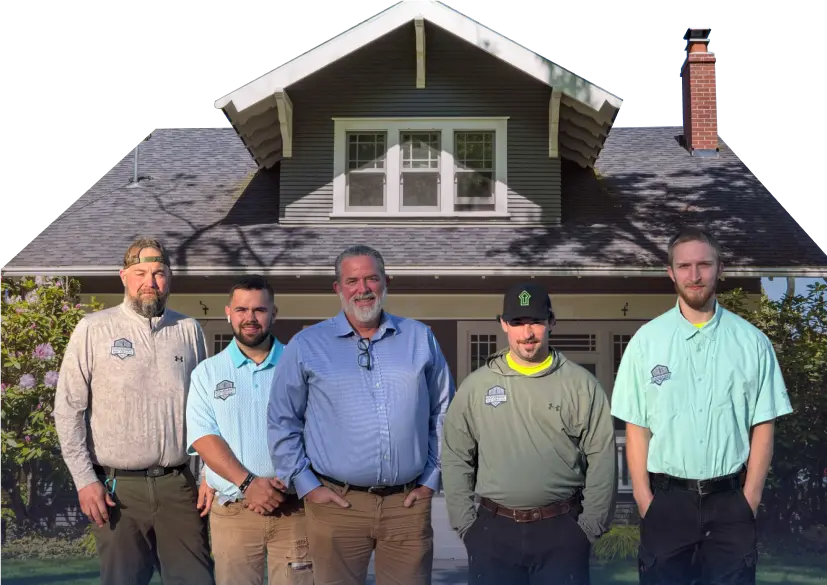
A small, hands-on team serving the Acworth lake community directly means each property gets personal attention, not a rushed, one-size-fits-all visit.
FAQ
Why do docks on Lake Allatoona attract so many spiders?
Wooden pilings, boat lifts, and shoreline brush give spiders shelter, moisture, and a steady supply of flying insects to eat. Open water proximity raises pest activity along docks and boathouses throughout Cobb County.
Which spiders commonly turn up on Acworth lake docks?
Orb-weavers spin large webs between railings and beams, while faster-moving dock spiders hide in waterline crevices. Black widows favor dark spaces like storage boxes or the undersides of boat lifts.
Does treating mosquitoes help control dock spiders too?
Yes — mosquitoes drawn to standing water and shoreline vegetation feed spider populations near docks. Covenant Pest Services targets both the webs and the insects feeding them with barrier applications.
Conclusion
In closing, protecting your Acworth lakefront property from spiders and mosquitoes requires a thoughtful, customized approach that respects both your family’s safety and the natural environment surrounding your dock. Covenant Pest Services combines thorough inspections with targeted treatments designed specifically for waterfront conditions, ensuring your outdoor spaces remain comfortable and pest-free throughout the season. With our commitment to integrity and excellence, we treat your property as we would our own—delivering the reliable, honest service your family deserves.