


If your house seems full of daddy long legs, you are most likely seeing cellar spiders. These long-legged true spiders live in damp basements, crawl spaces and the corners of rooms. They stay because the space is humid and has insects for them to eat. They also look more numerous than they are, because they keep adding to their webs instead of replacing them. They are harmless to people. To get rid of them, vacuum up the webs, spiders and egg sacs, dry the space out, cut down the insects they feed on and seal the gaps they come through. That is the approach Clemson Extension recommends.
Three Different Bugs Called “Daddy Long Legs”
The name gets used for three unrelated animals, according to UF/IFAS Extension. Which one you have changes the answer.
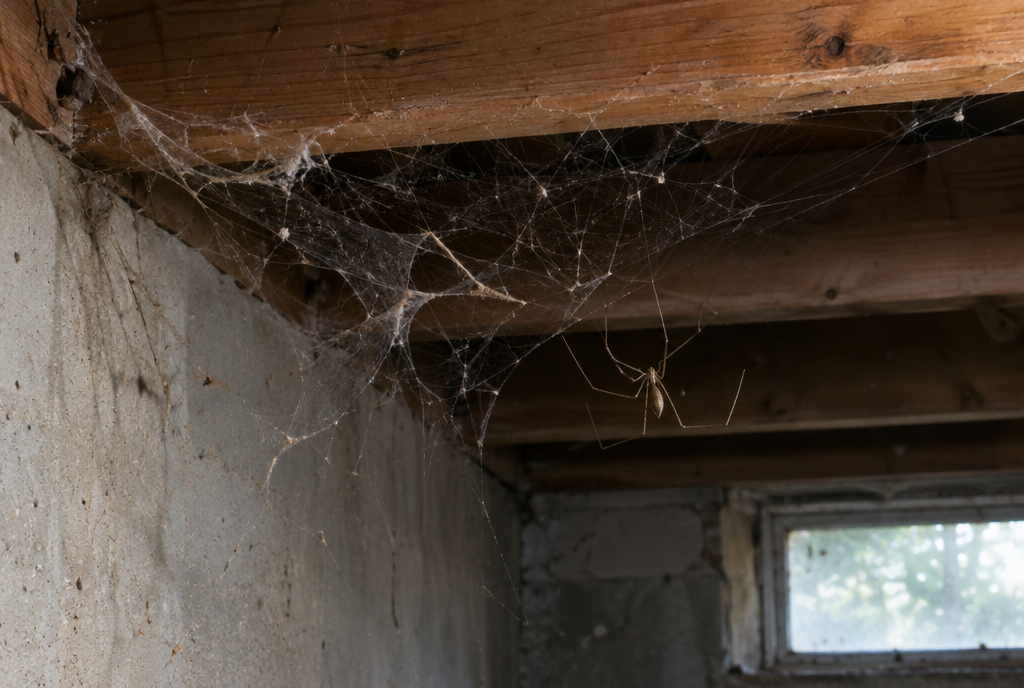
Cellar spiders (family Pholcidae). These are true spiders, with two body sections and eight eyes. They build loose, messy webs, often in corners, and hang upside down in them. Clemson Extension notes that when prey gets caught, they shake the web hard to tangle it further. The long-bodied cellar spider has a body only about 1/4 to 5/16 inch long, with legs that reach about 2 inches past it. These are the “daddy long legs” in basement corners and ceiling edges.
Harvestmen (order Opiliones). These are arachnids but not spiders. The body looks like one rounded section, and they make no silk, so a harvestman never builds a web. Virginia Cooperative Extension says they like damp, cool places such as leaf litter, basements and sheds, and that they come out mostly at night. They eat small insects, decaying matter and fungi. When threatened, they may play dead, drop a twitching leg or give off a bad smell.
Crane flies (family Tipulidae). These are insects, with six legs and wings. They look like giant mosquitoes. UF/IFAS says they do not bite or sting, and the adults live only a short time.
| Cellar spider | Harvestman | Crane fly | |
|---|---|---|---|
| What it is | True spider | Arachnid, not a spider | Insect |
| Body | Two sections, eight legs | One rounded section, eight legs | Six legs, wings |
| Web | Loose, messy webs in corners | None | None |
| Where you see it | Basements, crawl spaces, garages, room corners | Leaf litter, basements, sheds | Indoors after flying in |
| Danger to people | Harmless | No venom | Does not bite or sting |
Sources: UF/IFAS Extension, Clemson Extension, Virginia Cooperative Extension.
Are Daddy Long Legs Poisonous?
No. You may have heard that daddy long legs are the most venomous spiders in the world but have fangs too short to bite. UC Riverside’s spider researchers call that claim incorrect:
- Harvestmen have no venom glands and no fangs, so the myth can’t apply to them.
- Cellar spiders do have venom, like most spiders. UC Riverside says there is no scientific basis for calling them dangerous and no known case of a cellar spider bite harming a person. UF/IFAS calls their venom medically insignificant.
- Crane flies don’t bite or sting at all.
The large round webs in your yard and garden belong to a different spider. If that’s what you’re seeing, read are orb weaver spiders poisonous?
Why They Pile Up in Basements and Crawl Spaces
Clemson Extension says cellar spiders are most often found in damp cellars, basements and crawl spaces, which is where the name comes from. Several things make those spaces fill up:
- Humidity brings food. Insects are drawn to damp areas, and cellar spiders eat insects. Clemson recommends lowering humidity because dry air deters the insects the spiders feed on.
- The webs keep growing. Unlike many spiders, cellar spiders don’t eat their old web before spinning a new one. They keep adding to it, so a few spiders can leave a lot of webbing.
- They breed where they live. A long-bodied female produces about three egg sacs in her life, with 13 to 60 eggs in each. She carries them in her mouthparts instead of leaving them in the web.
- They live a long time. Clemson says it takes about a year to go from egg to adult, and adults may live up to two more years. A basement nobody cleans can build up a population over time.
Harvestmen gather for a simpler reason. They like the same damp, cool places, and basements and sheds fit the bill. If you are also finding centipedes or millipedes down there, moisture is the common thread. See centipedes and millipedes in Georgia homes.
How to Get Rid of Daddy Long Legs and Keep Them Out
You don’t need a spray to start. Clemson Extension’s steps for cellar spiders:
- Vacuum or sweep. Remove webs, egg sacs and the spiders themselves with a vacuum or broom. Clemson says this can cut numbers quickly and makes new activity easier to spot.
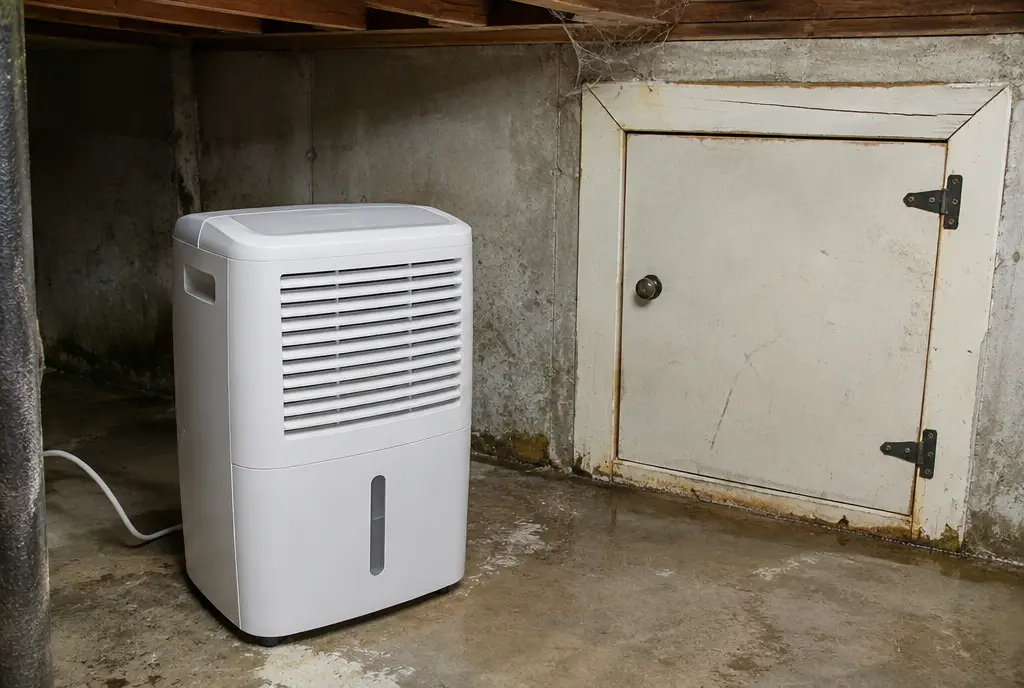
- Dry the space out. Run a dehumidifier or improve ventilation in the basement or crawl space.
- Cut their food supply. Fewer insects means fewer spiders. Good sanitation, upkeep and insect control all help.
- Change outdoor lights. Swap white exterior bulbs for yellow or sodium vapor lights, which attract fewer insects to the house.
- Seal entry points. Seal cracks and crevices around doors and windows, and add weatherstripping, a proper threshold and a door sweep.
- Use insecticide sparingly, if at all. Clemson says labeled insecticides should be used only temporarily and minimally, and should never replace cleanup and upkeep.
For harvestmen, sweep them up and carry them outside. Virginia Cooperative Extension describes them as beneficial: they eat aphids, beetle larvae and caterpillars and help break down organic waste. For a crane fly, open the door and let it out.
When It’s Time to Call Covenant Pest Services
Call us if the webs are back within days of vacuuming, if the basement or crawl space stays damp, or if you are also seeing the insects the spiders feed on. Covenant Pest Services provides general pest control for homes in North Acworth, Kennesaw, Marietta and across North Atlanta. Tell us where you’re seeing them and we’ll take a look.
Daddy Long Legs FAQ
Are daddy long legs spiders?
Some are. Cellar spiders are true spiders. Harvestmen are arachnids but not spiders, and crane flies are insects.
Do daddy long legs bite?
Harvestmen have no fangs or venom, and crane flies don’t bite. UC Riverside knows of no case of a cellar spider bite harming a person.
How long do daddy long legs live?
Cellar spiders take about a year to reach adulthood, and adults may live up to two more years, according to Clemson Extension. Adult crane flies live only a short time.
Do daddy long legs kill other spiders?
Cellar spiders do. UF/IFAS describes them as excellent predators of insects and sometimes of other spiders.
Does a lot of webbing mean a big infestation?
Not always. Cellar spiders keep adding to their webs instead of replacing them, so a small number can leave a lot of webbing.
What is the best way to kill daddy long legs?
A vacuum. Removing spiders, webs and egg sacs works quickly, and drying out the space and sealing gaps helps keep them from coming back.
Basement full of webs? Call (678) 820-6848 or request an estimate online.