



Most roaches that Georgia homeowners find are one of a few types. A big roach, 1.5 to 2 inches long and reddish-brown to dark red, is usually an American or smokybrown cockroach, the roaches people here call “palmetto bugs.” They live mostly outdoors and wander in. A small tan roach about half an inch long, with two dark stripes on the shield behind its head, is usually a German cockroach. German cockroaches live and breed indoors, so they are the ones to worry about. Here is how to tell Georgia cockroaches apart by size and color, using University of Georgia Extension guidance, and what each one means for your house.
Big Roaches in Georgia: American and Smokybrown (“Palmetto Bugs”)
“Palmetto bug” is not one species. UGA’s Field Report calls it a regional name for several winged cockroaches that can grow to more than an inch long, most often the smokybrown, American and Oriental cockroaches.
American cockroach. About 2 inches long, chestnut to light brown, with pale edges on the shield behind the head. According to UGA’s cockroach guide, it lives mainly in sewers and dark, damp places such as basements, and is rarely found in attics. It is active at night and runs fast.
Smokybrown cockroach. About 1.5 inches long and evenly dark cherry to dark red. This is usually the “red roach” Georgia homeowners describe. UGA calls it the most common cockroach in suburban Southern neighborhoods with mature hardwood trees. It lives in tree holes and in humid, sheltered spots such as attics, crawl spaces and sheds, and it is not common in kitchens. UGA’s Field Report adds that smokybrowns need constant moisture, come out at night, and may come inside looking for water. A leaky attic with pooled water can look a lot like a tree hole to them.
A useful clue: newly hatched smokybrown nymphs are only 1/8 to 3/16 inch long, with a white band across the back and white tips on the antennae. UGA notes they do not travel far, so finding them means an egg case hatched close by.
| Roach | Size | Color | Where it usually lives |
|---|---|---|---|
| American | About 2 in. | Chestnut to light brown | Sewers, damp basements; also outdoors |
| Smokybrown | About 1.5 in. | Dark cherry to dark red | Tree holes, attics, crawl spaces, sheds |
| Oriental | 1 to 1.25 in. | Cherry to black | Mainly outdoors; rare around suburban homes |
| German | 1/2 to 5/8 in. | Tan, two dark stripes behind the head | Indoors, mainly kitchens |
| Asian | 1/2 to 5/8 in. | Tan, two dark stripes behind the head | Outdoors in leaf litter, mulch and tall grass |
| Wood roach | Up to 1 in. | Light brown to nearly black | Outdoors under bark, logs and in woodpiles |
Sources: UGA Extension IPM cockroach guide; Penn State Extension (wood cockroaches).
Small Roaches in the Kitchen: German Cockroaches
The German cockroach is 1/2 to 5/8 inch long and tan, with two parallel dark stripes on the shield behind the head. UGA says it is almost always found indoors, mainly in kitchens near warm appliances and water. It is only seen outside in extreme indoor infestations. Heavy infestations may trigger allergies, especially in children.
A clean house does not rule German cockroaches out. UGA’s Field Report notes that in apartments and other multi-unit buildings, roaches can move through the walls from a neighboring unit even when your own unit is clean.
The lookalike: the Asian cockroach. UGA describes the Asian cockroach as nearly identical to the German, but with longer, narrower wings. The difference is behavior. Asian cockroaches live outdoors in shaded leaf litter, mulch and tall grass, they are drawn to light, and they fly, even during the day when disturbed. A small striped roach that flies to your porch light in the evening is probably Asian. One that runs under the refrigerator when you turn on the kitchen light is probably German.
UGA suggests sticky traps to find where small roaches are active, and says total-release “bug bombs” don’t work against German cockroaches and should not be used indoors.
Wood Roaches: The Outdoor Roach That Wanders In
If your house backs up to woods, the roach on your floor may be a wood cockroach. Penn State Extension describes them as light brown to nearly black, sometimes with cream-colored edges on the wings and the shield behind the head. Males grow to about 1 inch and have long wings. Females are up to 3/4 inch and have short wings that do not work.
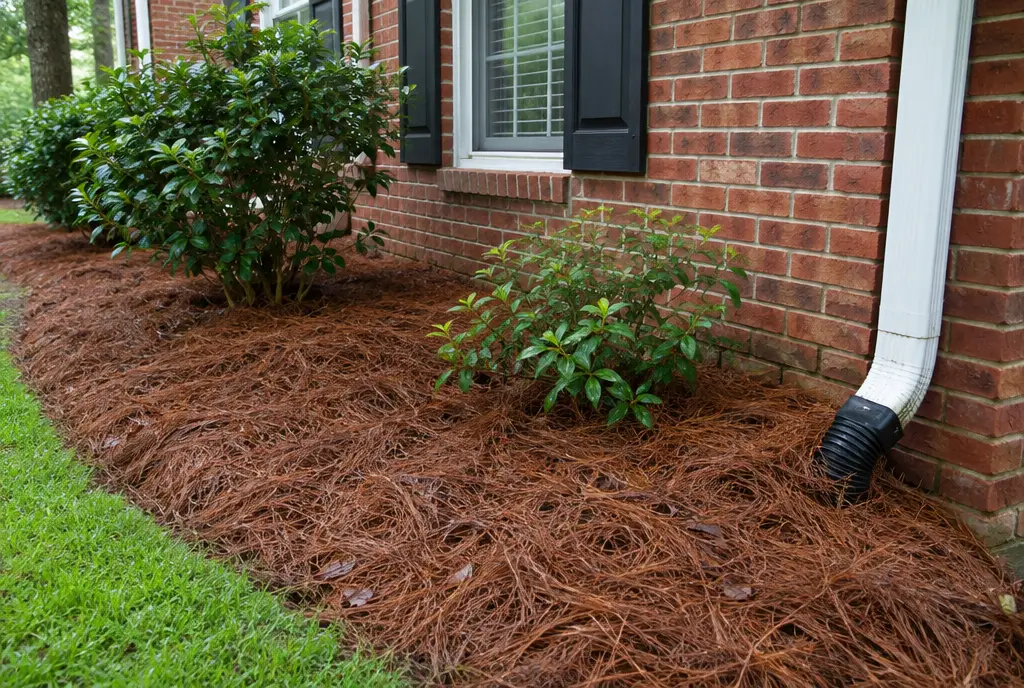
Wood roaches live outdoors in damp leaf litter, under logs and loose bark, in woodpiles and under stones. They get inside through foundation cracks and gaps around doors and windows, ride in on firewood, or fly toward porch lights at night. Once indoors, they do not feed or breed. Penn State says they dry out and die within a few days, so pesticides are not necessary or recommended. To keep them out:
- Bring in only as much firewood as you will burn in a few hours.
- Move firewood and debris piles away from the house.
- Caulk foundation cracks and gaps around doors and windows, and add a brush sweep to the bottom of doors.
- Turn off outdoor lights at night.
Which Roaches Mean a Problem Inside, and Which Are Just Visitors
The type of roach tells you most of what you need to know:
- German cockroach: a problem. It lives and breeds indoors, so one usually is not alone. Read if you find one cockroach, are there more? for what to check next.
- Smokybrown or American cockroach: usually a visitor coming in for water or shelter. If you see them indoors week after week, or find tiny smokybrown nymphs, they may be living in your attic, crawl space or basement, and there is likely a moisture problem nearby.
- Wood roach or Asian cockroach: usually an accidental visitor. Wood roaches can’t survive indoors, and UGA says Asian cockroaches rarely come inside unless lights draw them in.
For all of them, UGA’s prevention advice is the same. Make the outside of the house less inviting and close the gaps:
- Cut back hiding places. Limit mulch depth, keep groundcovers at least 1.5 feet from the foundation and clear out clutter.
- Fix moisture. Send rainwater and A/C condensate away from the foundation, ventilate attics, crawl spaces and basements, and get rid of standing water.
- Seal entry points. Seal cracks and gaps, install door sweeps and window screens, and screen foundation and attic vents.
UGA’s Field Report also recommends gel or granular baits over sprays, placed in small amounts where roaches are seen. Sprays can kill the tiny parasitic wasps that attack cockroach egg cases.
When to Call Covenant Pest Services
Call us if you are seeing small striped roaches in the kitchen or bathroom, if big roaches keep turning up inside, or if you are finding nymphs. Covenant Pest Services offers cockroach control for homes in Acworth, Kennesaw, Marietta and across North Atlanta. Tell us what the roach looked like and where you found it.
Georgia Cockroach FAQ
What are the big roaches in Georgia called?
Most people call them palmetto bugs. They are usually American cockroaches (about 2 inches, chestnut to light brown) or smokybrown cockroaches (about 1.5 inches, dark cherry to dark red).
What are the red roaches in Georgia?
A large roach that is evenly dark red or dark cherry is most likely a smokybrown cockroach. UGA calls it the most common cockroach in suburban Southern neighborhoods with mature hardwoods.
Are palmetto bugs and cockroaches the same thing?
Yes. “Palmetto bug” is a regional name for several large cockroach species, mainly the smokybrown, American and Oriental cockroaches.
Do wood roaches infest houses?
No. Penn State Extension says wood cockroaches do not feed or reproduce indoors and die within a few days, so sealing gaps and keeping firewood outside is usually enough.
How do I get rid of cockroaches in Georgia?
Start by identifying the roach. For outdoor roaches, fix moisture, cut back mulch and clutter near the foundation and seal gaps. UGA recommends baits over sprays and says bug bombs don’t work. German cockroaches breed indoors, and an established infestation is the case where a professional helps most.
Do you handle roaches in Kennesaw and Acworth?
Yes. We serve Kennesaw, North Acworth, Marietta and the rest of North Atlanta.
Not sure what kind of roach you found? Call (678) 820-6848 or request an estimate online.