




Ant season in Acworth, GA, can quickly become a nuisance if not addressed early. These tiny invaders often find their way into homes and businesses, searching for food and shelter. Fortunately, with proactive ant control measures, you can stop ant infestations before they begin and maintain a pest-free environment year-round.
Understanding Ant Behavior in Acworth
Ants are social insects that thrive in warm weather, making spring and summer peak times for activity. They build colonies and send out worker ants to forage for food, often invading kitchens, pantries, and outdoor spaces. Knowing their habits helps in planning effective prevention strategies. For more on how pest activity changes through the seasons here, see our guide to common pests in Acworth.
Common Ant Species in the Area
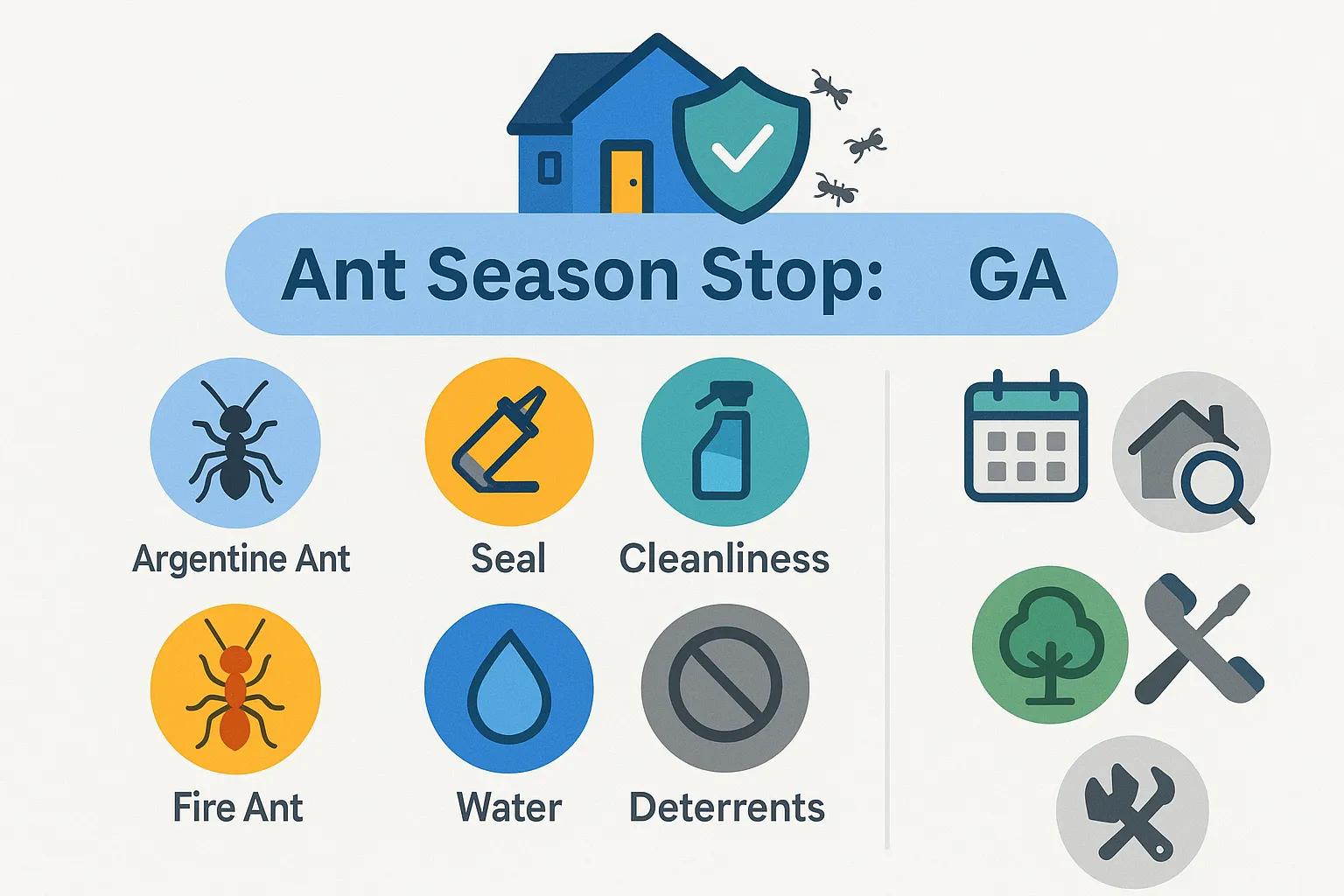
In Acworth, several ant species are prevalent, each with unique behaviors and nesting preferences. Argentine ants tend to form large, aggressive colonies, while carpenter ants prefer nesting in wood, potentially causing structural damage. Fire ants are known for their painful stings and aggressive nature. Recognizing these species can help tailor your pest control approach. If you suspect wood damage, our termite and wood-destroying pest inspections can tell you whether carpenter ants or termites are to blame.
Signs of Ant Activity
Early detection is key to preventing a full-blown infestation. Look for visible ant trails, small piles of dirt or sawdust near wooden structures, and increased ant sightings around food sources. Noticing these signs early allows for timely intervention. For professional advice and treatment options, visit our ant control service page.
Effective Strategies to Prevent Ant Infestations
- Seal Entry Points: Inspect your home for cracks, gaps, and holes around windows, doors, and foundations. Use caulk or weatherstripping to seal these entryways.
- Maintain Cleanliness: Keep kitchen counters, floors, and dining areas free of crumbs and spills. Store food in airtight containers to reduce attractants.
- Remove Standing Water: Fix leaks and eliminate standing water sources, as ants need water to survive.
- Trim Vegetation: Keep trees and shrubs trimmed away from your home to reduce ant access points.
- Use Natural Deterrents: Sprinkle cinnamon, vinegar, or lemon juice near entry points to repel ants naturally.
Seasonal Maintenance Tips
Regularly inspect your property during the late winter and early spring months to prepare for the upcoming ant season. Cleaning gutters, removing debris, and checking for moisture buildup can reduce ant nesting opportunities. If you’re not sure whether what you’re seeing is ants or termite swarmers, see how to tell termite swarmers from flying ants.
Safe Use of Chemical Treatments
While natural deterrents are helpful, sometimes chemical treatments are necessary. Use pesticides responsibly, following label instructions carefully to protect your family, pets, and the environment. Consider spot treatments rather than widespread application. For more information on safe pest control practices, visit our blog.
Why Store-Bought Sprays Often Don’t Stop Ants
Spraying the trail on your counter kills the ants you can see, but the colony is somewhere else: under a slab, in a wall void or out in the mulch bed. A few problems come up again and again:
- The colony survives. Workers are a small slice of the colony. Slow-acting baits work better because foragers carry them back to the nest and the queen.
- Some colonies split. Species like pharaoh ants can break into several new colonies when stressed by repellent sprays, which spreads the problem.
- Fire ant mounds move. Drenching one mound often just pushes the colony a few feet over. Treating the whole yard works better than chasing individual mounds.
If ants keep coming back after a couple of weeks of baiting and cleanup, it’s time for a professional ant control inspection.
Ant Control for Acworth Businesses
Restaurants, offices, daycares and warehouses deal with the same species as homes, but the stakes are higher. A trail of ants in a dining room or break room costs you customers and can show up on an inspection. For businesses, we focus on:
- Finding where ants enter, usually at door thresholds, utility lines and expansion joints.
- Placing baits where staff and customers won’t disturb them.
- Scheduling visits around business hours, with documentation for your records.
See our commercial pest control page for businesses in Acworth, Kennesaw, Woodstock and Marietta.
Protect Your Home from Ants Today
Don’t wait for ant season to take over your home. Contact Covenant Pest Services for pest control in Acworth, GA, and we’ll schedule an inspection and a customized prevention plan. Explore our gallery to see our work and learn more about our team on our about page.
Frequently Asked Questions
What types of ants are commonly found in Acworth, GA?
In Acworth, GA, the most common ant species include the Argentine ant, carpenter ant, and fire ant. Argentine ants are notorious for forming large colonies and can invade homes in search of food. Carpenter ants, on the other hand, can cause structural damage as they nest in wood. Fire ants are aggressive and can deliver painful stings. Understanding the specific types of ants in your area can help tailor your pest control strategies effectively.
How can I identify an ant infestation in my home?
Identifying an ant infestation typically involves spotting live ants, especially near food sources or entry points. You may also notice ant trails, which are pheromone paths leading to food. Additionally, look for small piles of dirt or sawdust, particularly with carpenter ants, indicating nesting sites. If you see these signs, it’s crucial to act quickly to prevent a larger infestation.
Does Covenant Pest Services treat ants in Acworth?
Yes. Covenant Pest Services is based in Acworth and handles ant control for homes and businesses across Acworth and North Atlanta, including inspections, targeted treatments, and ongoing prevention plans. You can request an inspection through our contact page.
What are the risks of not addressing an ant infestation?
Failing to address an ant infestation can lead to several risks, including property damage, especially with carpenter ants that can weaken wooden structures. Additionally, ants can contaminate food sources, posing health risks. Some species, like fire ants, can also deliver painful stings, which may lead to allergic reactions in sensitive individuals. Prompt action is essential to mitigate these risks.
Can DIY methods effectively control ant populations?
DIY methods can be effective for controlling small ant populations, especially when combined with preventive measures. Techniques such as using natural deterrents, sealing entry points, and maintaining cleanliness can help. However, for larger infestations or specific species like carpenter ants, professional intervention may be necessary to ensure complete eradication and prevent recurrence. See our ant control service for what a professional treatment includes.
When is the best time to implement ant prevention strategies?
The best time to implement ant prevention strategies is before the peak ant season, which typically begins in spring. Starting your prevention efforts in late winter or early spring can significantly reduce the likelihood of infestations. Regular maintenance throughout the warmer months is also crucial to keep your home ant-free year-round.
When to Call Professional Pest Control
If you notice persistent ant trails or large colonies inside your property, it may be time to seek professional help. Our technicians can identify the ant species and apply targeted treatments that are safe and effective. Schedule your inspection with Covenant Pest Services.
Conclusion
Proactively managing ant populations in Acworth, GA, can significantly improve your home’s comfort and safety. By putting prevention strategies in place and knowing when to call a professional, you can protect your property from infestations and their risks. Don’t wait for ant season to disrupt your life. Call (678) 820-6848 or contact Covenant Pest Services today to schedule your inspection.