


A Georgia termite letter is the common name for the Official Georgia Wood Infestation Inspection Report. Under Georgia’s structural pest control rules, it is the written report that certifies a building is apparently free of wood-destroying organisms as a basis for selling real property, and only a pest control operator certified in wood-destroying organisms may issue it. If you are buying or selling a home in Cartersville, this is the report your closing paperwork is asking for.
What Is a Georgia Termite Letter?
“Termite letter” is the everyday name. The Georgia Department of Agriculture uses the same nickname for the Official Georgia Wood Infestation Inspection Report on its consumer information page. The report follows a set format laid out in Georgia rule 620-6-.03, so a letter for a house in Cartersville looks the same as one for a house in Marietta or Kennesaw.
The report is not a general home inspection. It answers a narrower question: did a certified inspector find evidence of wood-destroying organisms in the structure, and are there conditions that could lead to them? A home inspector’s report does not replace it.
What Does the Report Check For?
Georgia’s rule names five groups of wood-destroying organisms that the report and its guarantee cover:
- Subterranean termites
- Dry wood termites
- Powder post beetles
- Wood boring beetles
- Wood decaying fungi
Subterranean termites are the most common termite in Georgia, so they are the finding most buyers and sellers worry about. Because the report covers all five, an inspector may also note fungus or beetle activity in a crawl space even when there are no termites.
Who Can Issue a Termite Letter in Georgia?
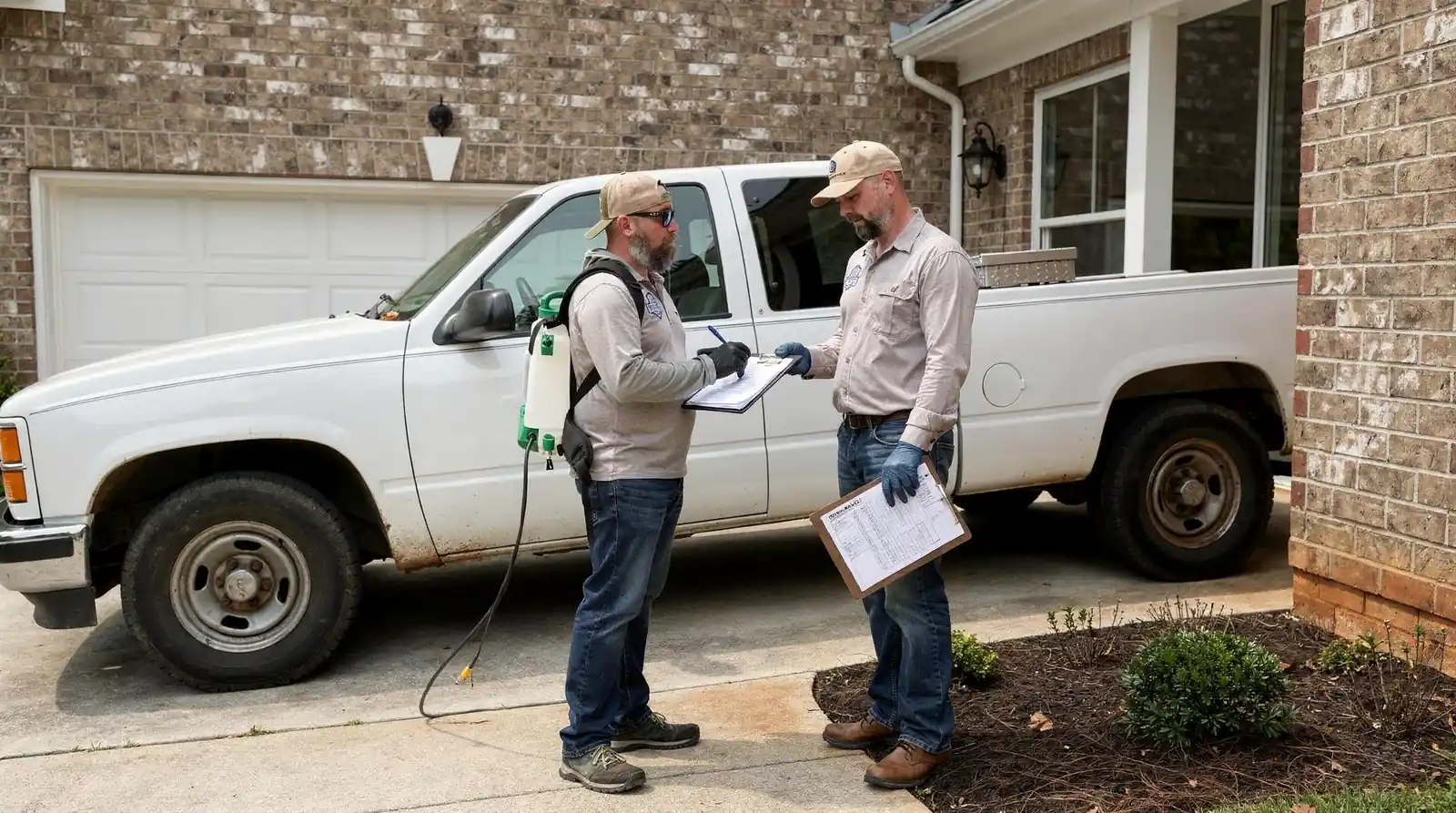
Only a pest control operator certified in wood-destroying organisms may issue the official report. That is the first thing to check when you choose a company: ask whether they are certified in the wood-destroying organism category and whether they issue the official Georgia form, not a homemade letter.
If you are buying a home and the report you received looks incomplete or inaccurate, the Georgia Department of Agriculture lets you request a state inspection through its Structural Pest Control program. Its consumer information page explains how.
What Is the 90-Day Termite Letter Guarantee?
Every official report carries a guarantee set by Georgia rule. If an infestation of a wood-destroying organism that the report certified the house as apparently free of is found within 90 days of the date the report was issued, the company that issued it must treat the infested structure free of charge.
The rule also sets what that treatment has to be. For subterranean termites, the structure gets a full minimum adequate treatment, or a partial treatment around the infested areas if the house already had a full treatment within the past year. Beetles, fungi and dry wood termites each get the minimum adequate treatment the rule defines for them. The guarantee is a treatment promise, not a promise to pay for repairs, so read the report and any separate termite contract carefully.
When Should Cartersville Sellers and Buyers Order One?
Your sales contract and your lender decide who orders the report and by what date, so check both before you schedule. Two practical points apply to most Bartow County sales:
- Sellers: ordering early gives you time to deal with any finding before it becomes a negotiation point.
- Buyers: make sure the report’s date of issue falls close enough to closing that the 90-day guarantee still means something after you move in.
Cartersville is the Bartow County seat, about 25 miles from our office in Acworth, so plan the inspection a few days ahead of your closing deadline rather than the day before.
What Happens If the Inspector Finds Termites?
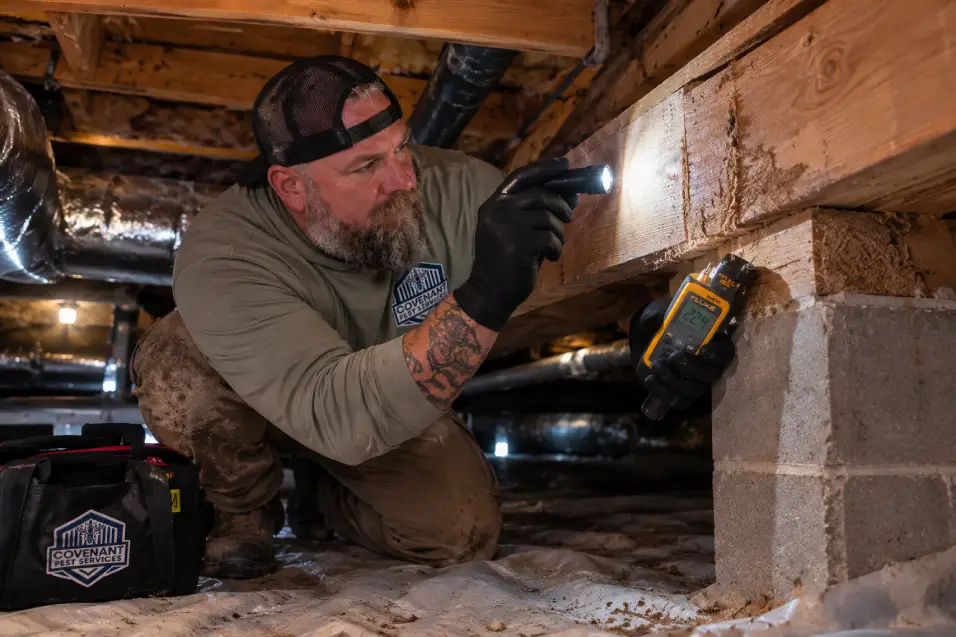
A finding does not have to end a sale. The report records what the inspector saw, and the buyer and seller then decide, usually through their agents, whether treatment happens before closing and who pays for it. Mud tubes on the foundation are a common sign of subterranean termites, and they are one of the things an inspector looks for along the foundation and in a crawl space.
If treatment is needed, ask for the treatment plan in writing, including whether the house will be covered by an ongoing termite contract after closing. Our termite control service page explains the treatment options we use.
Need Termite Help After the Report?
If the report shows termite activity, or you want ongoing protection once you move in, Covenant Pest Services handles termite control from our office in Acworth, about 25 miles from Cartersville. Call (678) 820-6848 or request an estimate online, and tell us your closing date so we can plan around it. Our termite control service page lists the treatment options.
Live closer to Acworth? See termite control for Acworth homes.
Georgia Termite Letter FAQ
What is the official name of a Georgia termite letter?
The Official Georgia Wood Infestation Inspection Report. “Termite letter” is the common name, and the Georgia Department of Agriculture uses it too.
Who is allowed to issue a termite letter?
Only a pest control operator certified in wood-destroying organisms. A general home inspector cannot issue the official report.
Does a termite letter come with a guarantee?
Yes. If an infestation the report certified the house as apparently free of is found within 90 days of issue, the company that issued it treats the structure free of charge, as Georgia’s rule sets out.
Does the report cover more than termites?
Yes. It covers subterranean termites, dry wood termites, powder post beetles, wood boring beetles and wood decaying fungi.
What can a buyer do about an inaccurate report?
Ask the Georgia Department of Agriculture’s Structural Pest Control program for an inspection. Its consumer information page lists an incomplete or inaccurate termite letter as a reason to request one.