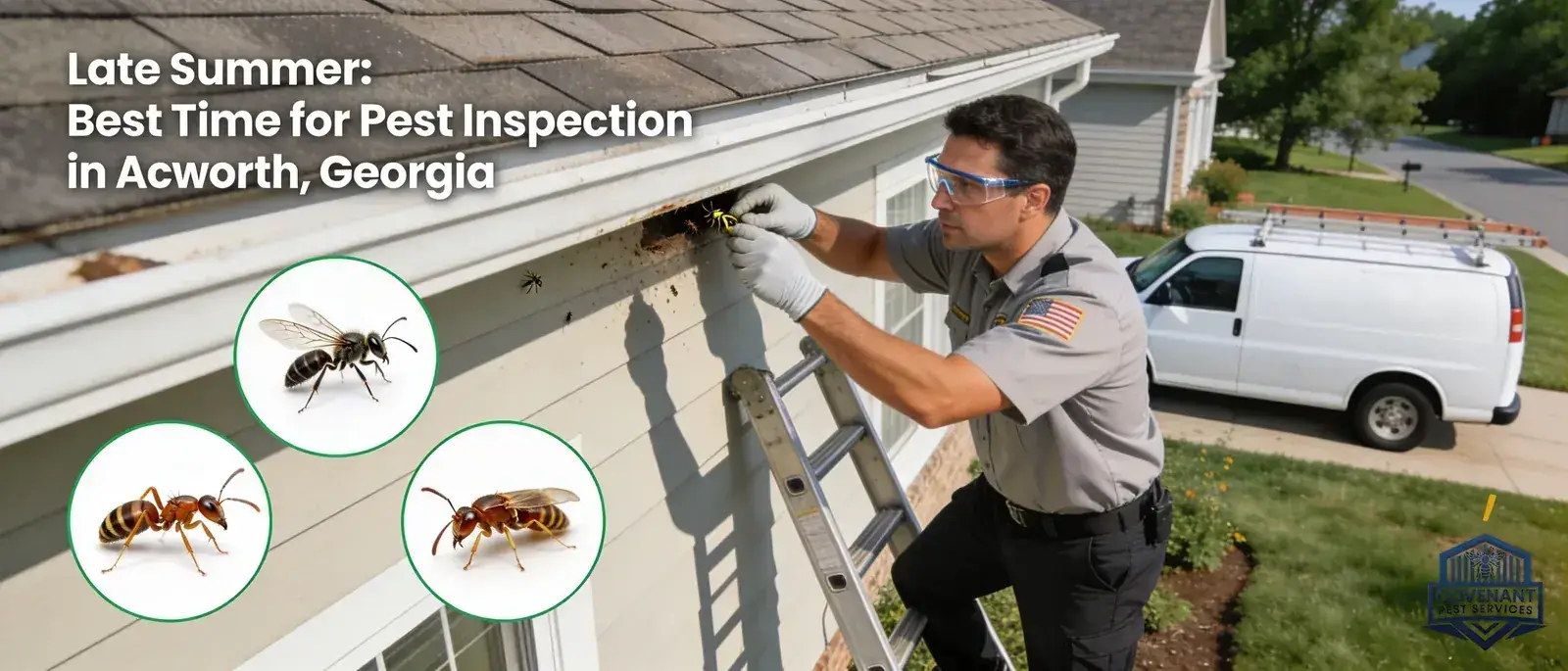




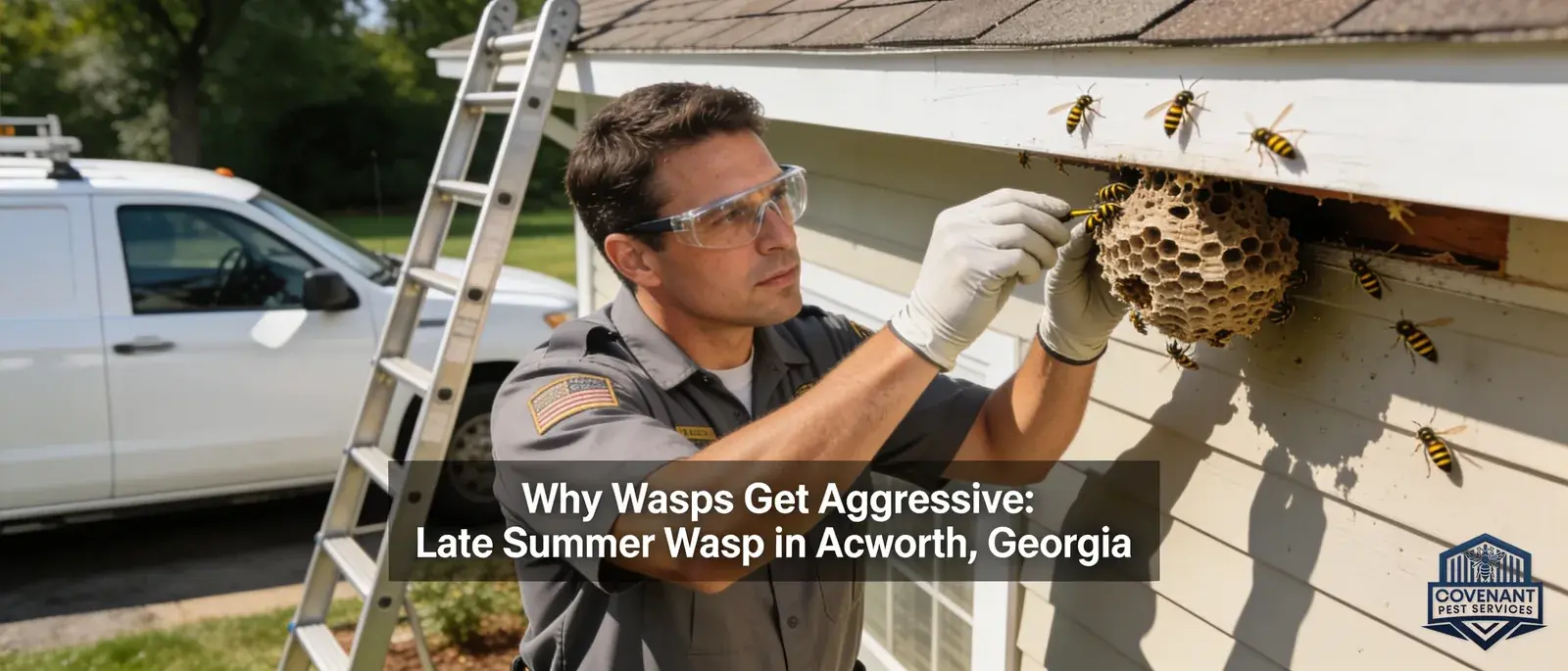
Wasp colonies in Acworth reach peak population by late summer. Shrinking food sources push worker wasps into scavenging mode near decks, grills, and trash cans. Colonies also shift focus to protecting the nest as cooler fall weather approaches. Covenant Pest Services notes this survival instinct, not anger, drives the increased stinging risk to families and pets.
Key Takeaways
- Wasp populations grow throughout summer and peak by fall, making late summer the most aggressive period.
- Yellow jackets hatch in spring and multiply for months, creating larger colonies by late summer in Georgia.
- Wasps intensify aggression in late summer while searching for food sources near human outdoor activities.
- Late summer wasp activity increases around cookouts, trash cans, and deck areas where food attracts colonies.
Why do Acworth wasps turn aggressive in late summer?
Colony size peaks in late summer. That population surge drives the aggressive behavior Acworth homeowners notice on decks and patios in August and September. Nests that started small in spring have spent months multiplying, and by late summer they reach their largest, most defensive stage of the year. That timing explains why a quiet backyard in June can turn into a stinging hazard by Labor Day.
The cycle starts earlier than most residents realize. Yellow jackets and wasps hatch in spring, then spend the summer expanding their colonies steadily. A single nest tucked into an eave or woodpile in Acworth can grow from a handful of workers to a much larger, more established colony by the time cooler weather approaches.
Why do wasps get more aggressive as fall approaches?
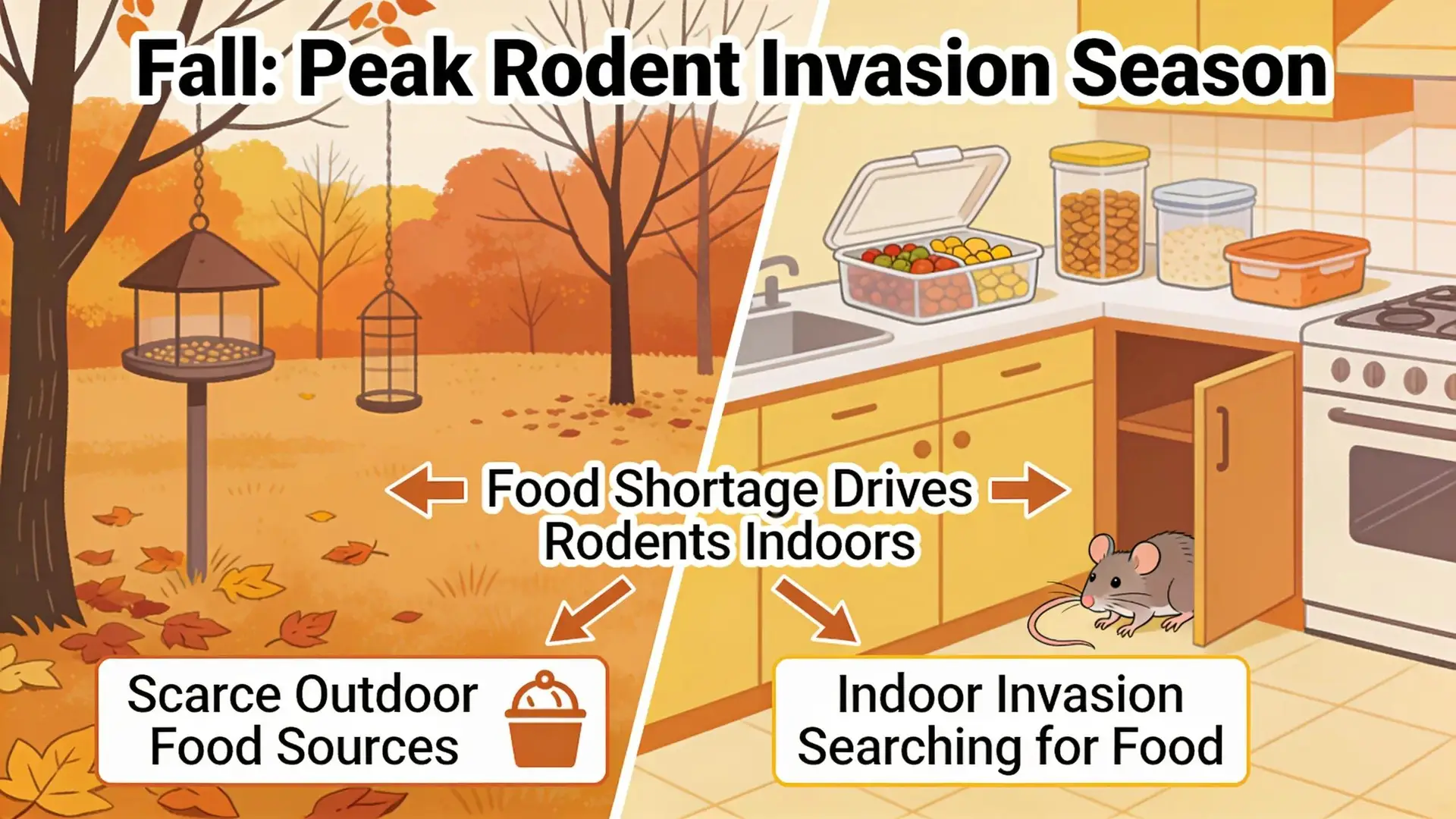
Food becomes scarce as summer winds down, and colonies respond by foraging harder and defending territory more fiercely. Wasps searching for extra resources to keep the colony fed grow bolder around anything that smells sweet or smells like protein. Including grills, trash cans, and fruit trees.
What does this look like in an Acworth backyard?
Homeowners tend to notice the shift in a few familiar spots:
- Cookouts and grills, where food odors draw wasps mid-meal
- Decks and porches, especially near eaves where nests often hide
- Trash cans and recycling bins, a reliable late-summer food source
- Fruit trees or fallen fruit, which attract foraging workers
These aren’t random encounters. They reflect a colony under pressure, working overtime before the season ends. For Acworth families weighing wasp control Acworth GA options, understanding this late-summer surge makes clear why professional intervention often outperforms a wait-and-see approach near kids’ play areas or pet-friendly yards.

What draws wasps to your yard and eaves?
Late-summer wasp colonies outgrow their spring nests, forcing worker wasps to hunt farther for food. That search often ends in an Acworth backyard, right where kids play or a family sits down for dinner on the deck. Colony growth, not bad luck, explains why late August and September bring more stings than June ever does. Understanding this shift is the first step toward effective wasp control Acworth GA homeowners can rely on before a sting sends someone to urgent care.
Why do wasps suddenly show up at cookouts and picnics?
Wasps chase two things: sugar and protein. A soda can, a dropped hot dog, or an open trash bin near an Acworth patio reads like an invitation. Picnics at neighborhood parks, backyard cookouts, and even a bowl of fruit left on the porch all become targets once colonies grow hungrier in late summer.
What yard features make wasps more likely to nest nearby?
Eaves, deck overhangs, and shaded fence lines offer shelter that colonies favor as they expand. Gardens draw wasps too, since flowering plants and fallen fruit provide easy food sources close to where families relax.
Common wasp magnets around an Acworth property include:
- Uncovered trash cans or recycling bins near the patio
- Sugary drinks and food left out during yard play or dinners outside
- Fruit trees, gardens, or compost piles
- Eaves, sheds, and deck corners offering shelter
Kids climbing trees, dogs sniffing around the yard, and neighbors gathering for a weekend cookout all raise the odds of a close encounter during this stretch of the calendar. Recognizing these draws early gives homeowners a real chance to protect their yard before wasp activity peaks.
How risky are stings for Acworth kids and pets?
Small size does not equal small danger. Wasps buzzing around an Acworth backyard in August. September present a genuine hazard, even though they weigh almost nothing and measure barely an inch long. The real risk comes from proximity, and late summer puts families squarely in the path of trouble.
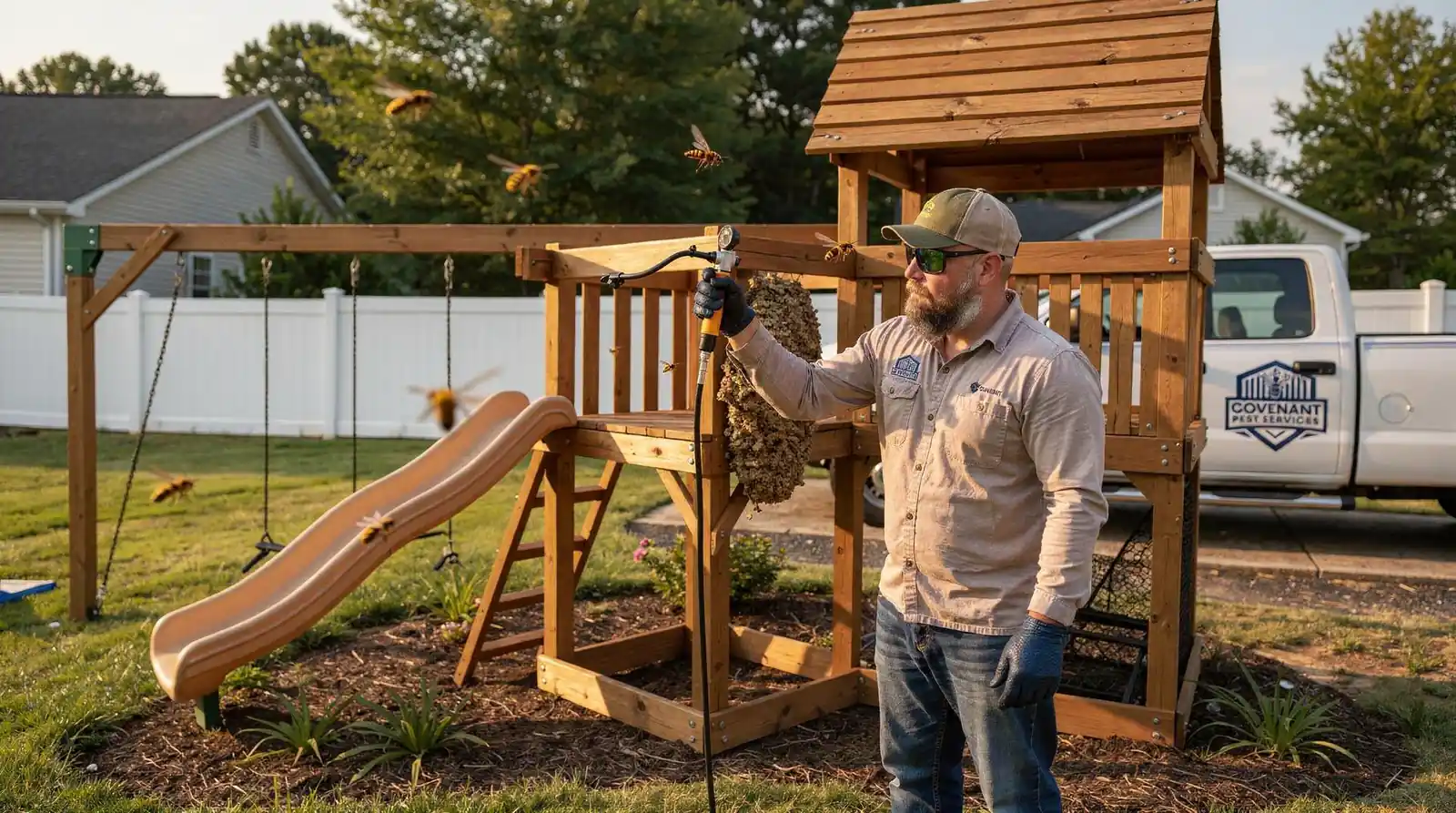
Picture a typical Acworth evening: kids racing across the lawn, climbing a tree, sliding down a backyard playset, or chasing a soccer ball near the deck. That kind of movement and energy draws attention from wasps guarding nests nearby. Pets exploring the yard face similar exposure, often sniffing around eaves, woodpiles, or shrubs where nests hide.
Why do sting encounters feel so sudden?
Homeowners consistently describe these run-ins as unexpected and painful, arriving without warning during an otherwise ordinary afternoon. A child reaching for a toy or a dog nosing through mulch can trigger a defensive swarm within seconds. That unpredictability is what makes late-summer wasp activity near decks and play areas so unsettling for parents.
What should families watch for around the home?
- Eaves, gutters, and attic vents where nests attach and grow unnoticed
- Deck railings, playsets, and sheds offering sheltered nesting spots
- Trash cans and food areas that attract foraging wasps
- Woodpiles and dense shrubs where ground and cavity nests hide
Professional wasp control Acworth GA services address these hiding spots before stings happen, not after. Covenant Pest Services treats every yard, deck, and eave with the same attention its team would want for their own family’s home, recognizing what’s at stake when children and pets share the space with an aggressive late-summer nest.
Should you remove a wasp nest yourself?
Removing a wasp nest without professional help risks stings, allergic reactions, and repeat infestations near an Acworth home’s deck or eaves. Late summer raises the stakes: homeowners across the region report wasps behaving far more aggressively than they did earlier in the season, often swarming without warning when a nest gets disturbed. A single misstep with a garden hose or a can of store-bought spray can send an entire colony into defense mode, putting kids and pets in the yard at real risk.
Is it safe to spray a wasp nest myself?
Spraying a visible nest seems simple, but hidden colonies inside eaves, attic vents, or ground burrows often go untreated. Missed nests regroup and rebuild within days, leaving the same danger behind. Professional wasp control Acworth GA services rely on thorough inspections that locate every nest, not just the obvious one.
What does professional wasp removal actually involve?
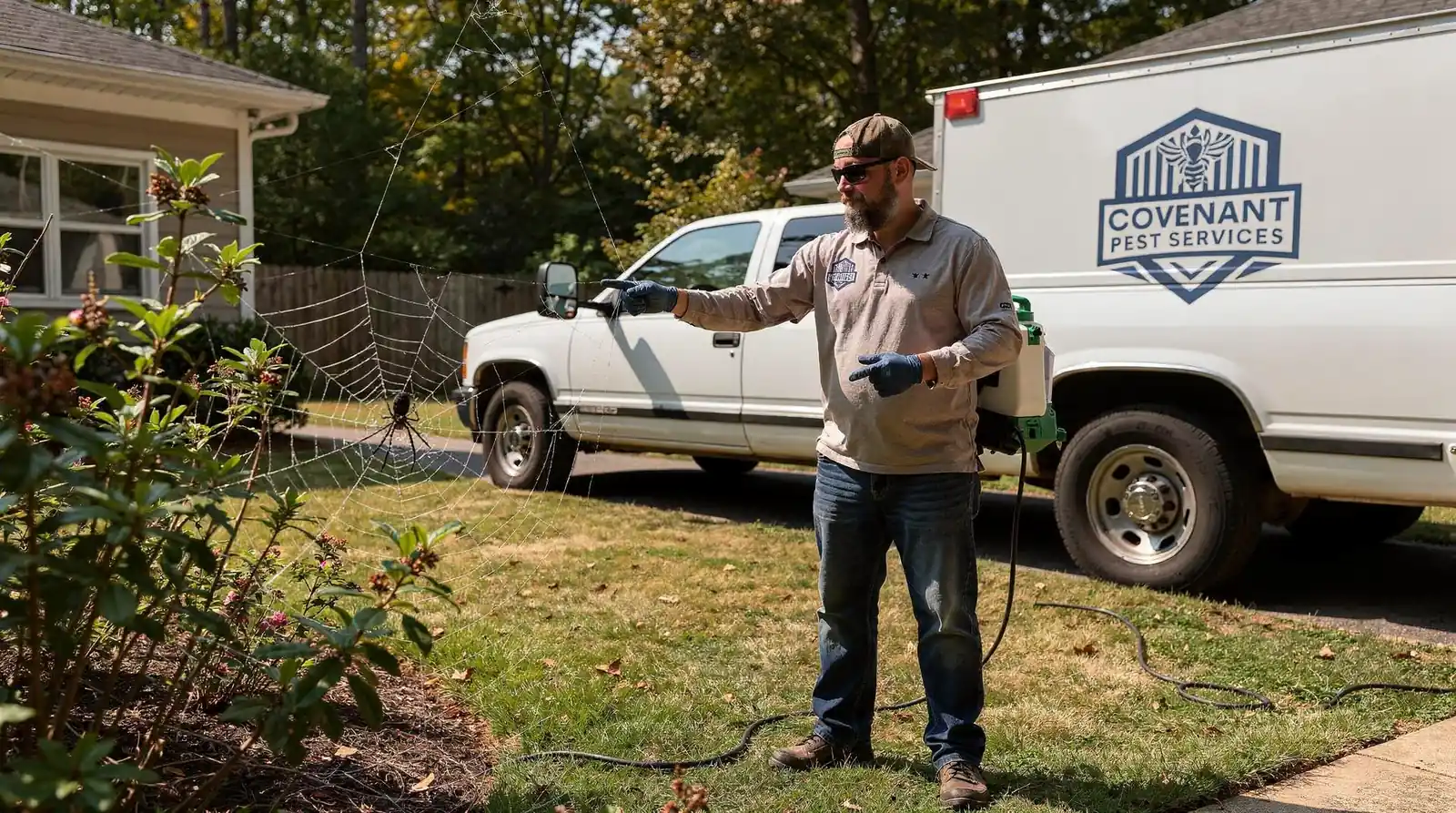
A trained technician assesses the property before touching a nest, then applies targeted treatments matched to the infestation.
- Perimeter barrier treatments that stop new colonies from settling near the home
- Interior applications for nests that have worked into wall voids or attic spaces
- Seasonal follow-up visits to catch fall population surges before they peak
Based in Acworth, GA, Covenant Pest Services responds quickly to local wasp activity as the weather cools and colonies grow more defensive. Every treatment comes backed by a a notable share satisfaction guarantee, giving homeowners confidence that the job gets done right the first time. For a yard already buzzing with late-summer activity, calling a professional beats risking a sting-filled afternoon.
How can Acworth homeowners get ahead of wasps?
Early action beats late-summer surprise. Waiting until a nest grows near the deck or eaves costs homeowners more time, money, and risk of stings to kids and pets. Acworth properties near wooded lots, ponds, or dense landscaping give wasps ideal building sites, so a proactive plan matters more than a reactive one.
Covenant Pest Services provides wasp control Acworth GA homeowners can count on, built into a broader lineup of pest management services covering general pest control, termite protection, mosquito reduction, and wildlife removal across North Atlanta properties. That range matters because wasp problems rarely show up alone. The same yard conditions that draw wasps often invite other pests too.
Is a one-time treatment enough for wasps?
Rarely. Wasp colonies rebuild fast once a queen finds a new site, so single visits miss activity that starts weeks later. Covenant addresses this through ongoing maintenance relationships, including quarterly visits and seasonal adjustments designed to catch nests before populations peak in late summer.
What should homeowners look for in a pest control partner?
Trustworthiness matters as much as technique. Covenant operates on a faith-driven commitment to honesty. Integrity, treating every property with the same care the company would want for its own home.
Homeowners across the region have access to this approach, including in:
- Acworth
- Kennesaw
- Marietta
- Smyrna
- Broader North Atlanta Metro communities
Getting ahead of wasps means scheduling inspections before nests mature, not after the first sting.
As late summer approaches in Acworth, understanding wasp aggression helps you protect your home and family. These insects become territorial and defensive as their colonies prepare for seasonal changes, making encounters more likely around your property. By recognizing this natural behavior pattern, you can take proactive steps to minimize risks and maintain a safer outdoor environment during these critical months.
FAQ
Why do wasps become more aggressive in late summer around Acworth homes?
Wasp colonies reach peak population by late summer. Shrinking food sources push worker wasps into scavenging mode near decks, grills, and trash cans. This survival instinct, not anger, drives the increased stinging risk.
What causes wasp colonies to grow so large by late summer?
Yellow jackets and wasps hatch in spring, then spend the summer multiplying steadily. A nest that started small in an eave or woodpile can grow into a large, defensive colony by late summer.
Where do Acworth homeowners typically encounter aggressive wasps?
Wasps commonly appear around cookouts and grills, decks and porches near eaves, trash cans and recycling bins, and fruit trees or fallen fruit, all reliable food sources during this foraging surge.