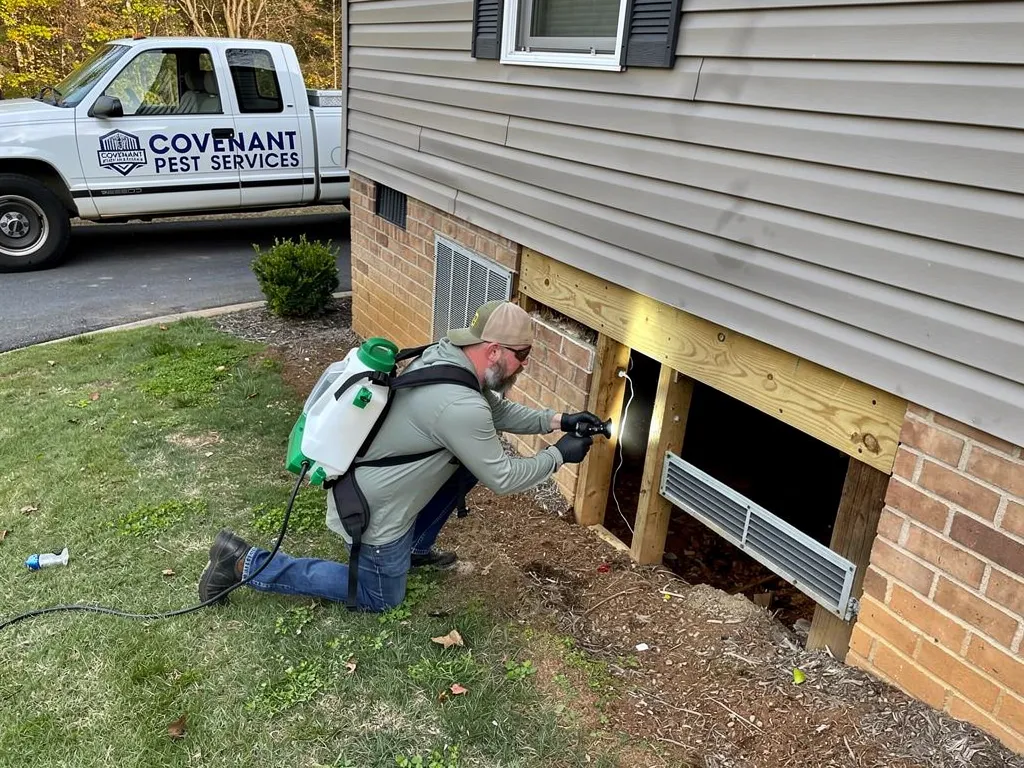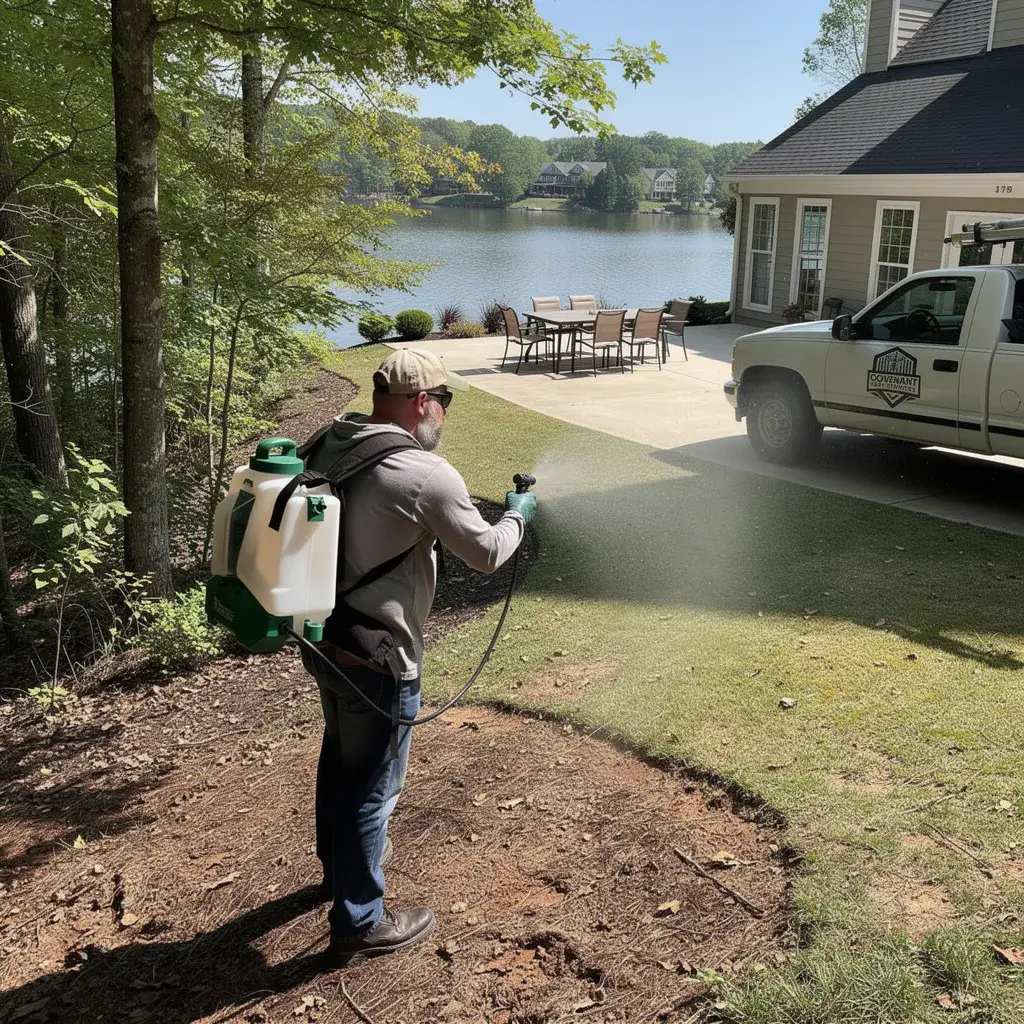





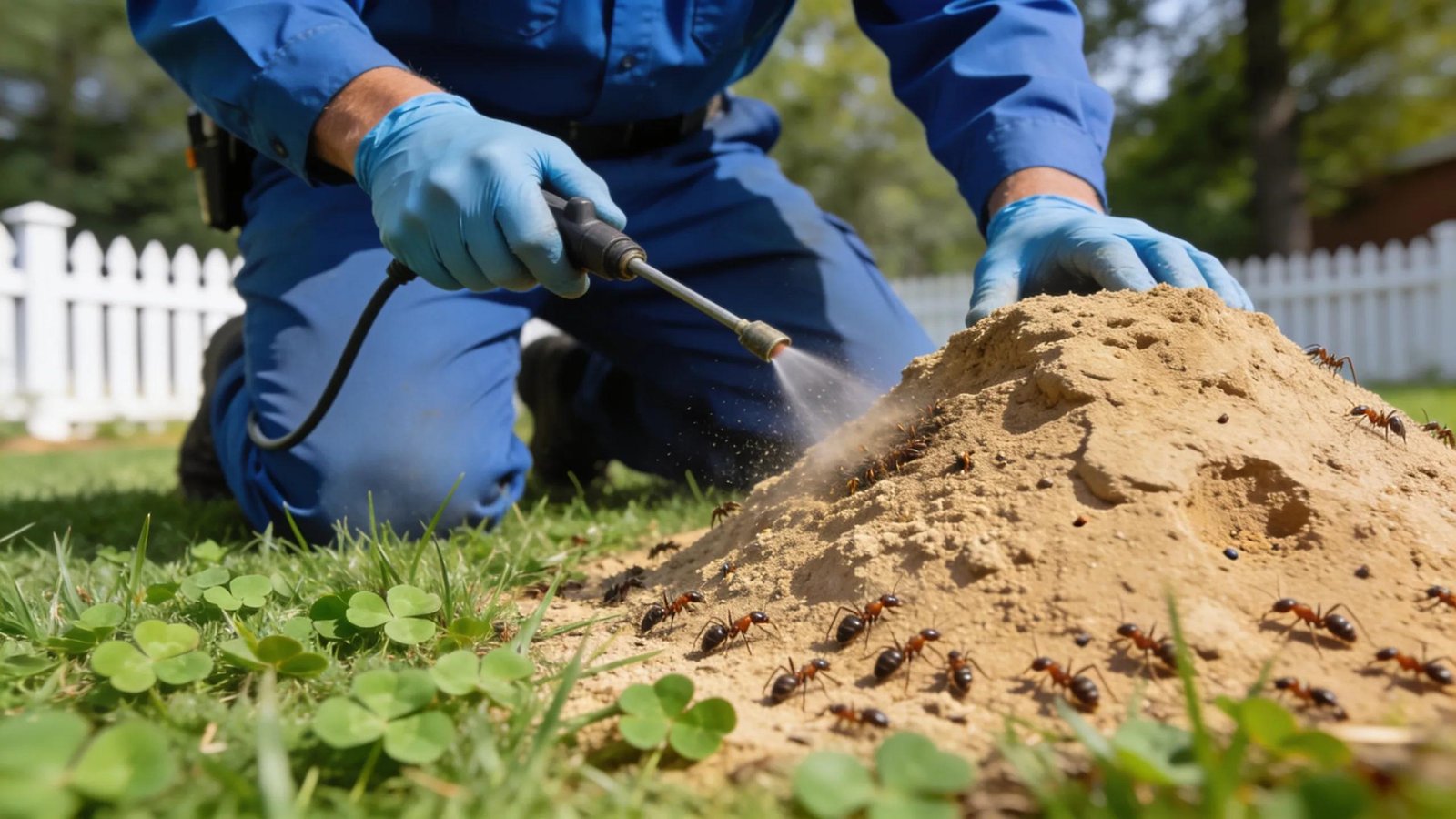
Fire ant broadcast control and turf mound treatment protect Alpharetta, Georgia lawns, equestrian pastures, and pool decks from painful stings and unsightly mounds. Covenant Pest Services, serving North Atlanta Metro from its Acworth, GA base, combines broadcast bait applications with targeted mound treatments for lasting suppression, backed by its No-Worry Guarantee.
Key Takeaways
Fire ants thrive in open grassy areas across Georgia, infesting golf courses, sports fields, parks, and commercial properties.
Covenant Pest Services offers first lawn treatment for just $19.95 to eliminate fire ant mounds from your turf.
Mound treatments and broadcast applications provide comprehensive fire ant control solutions tailored to your property’s specific needs.
Contact Covenant Pest Services at 984-309-4304 Monday through Friday, 8:00am to 7:00pm EDT for immediate assistance.
Why Are Fire Ant Mounds Taking Over Your Lawn?
Fire ant colonies build mounds fast, and Alpharetta lawns offer plenty of open, sunny ground for them to spread. Established colonies can surface without warning, leaving homeowners startled by mounds that weren’t there a day earlier. For families with large properties in Alpharetta. Milton, that unpredictability makes fire ant control in Alpharetta, GA a genuine priority, not a seasonal afterthought.
A yard can look completely clear one afternoon and show a fresh mound the next morning. These new mounds tend to pop up near driveways, mailboxes, and children’s play areas. Equestrian properties face the same risk along fence lines and paddock edges. Pets and horses walk daily and stings become a real hazard.
Why do mounds explode after a rainstorm?
Heavy rain doesn’t create new colonies; it exposes ones already living underground. Water saturates the lower chambers of a nest, and the ants push upward toward drier soil. Within a day or two of a North Atlanta storm, visible mounds rebuild across the lawn, often in numbers that surprise homeowners who thought the problem was gone.
Does one mound mean one colony?
Rarely. A single visible mound usually represents just a fraction of the ants living below the surface. The colonies causing an August mound surge were already established weeks or months earlier. This is why effective lawn fire ant treatment in Alpharetta targets the full colony network rather than isolated mounds.
For properties with pools, paddocks, and wide-open lawns, a qualified fire ant exterminator serving North Fulton, GA evaluates the whole landscape, not just the mounds currently visible on the surface.
What Makes Fire Ants Thrive in Alpharetta Lawns?
Open, sunlit grass draws fire ants the way a full pantry draws mice. Wide lawns on large Alpharetta and Milton estates resemble the South American savanna terrain where fire ants originated, giving colonies exactly the kind of open ground they seek out. Sprawling acreage, equestrian pastures, and long pool decks recreate that native habitat on a grand scale, which explains why bigger properties often see more mound activity than a standard suburban yard.
Soil conditions matter just as much as space. Fire ants build tall, hardened mounds in sun-exposed soil, and pool surrounds and pasture edges check every box on that list. Full sun bakes the mound crust hard. Open turf gives colonies room to expand without competition from tree cover or dense shrub lines.
Why Do Large Properties Seem to Attract More Mounds?
Acreage simply offers more territory to colonize. Estate lawns, riding rings, and pasture fence lines mimic the parks, school grounds, and institutional landscapes fire ants already colonize with ease elsewhere. A five-acre equestrian property gives ants far more open turf to exploit than a quarter-acre suburban lot.
Do Fire Ants Prefer Certain Areas of a Property?
Sunny, undisturbed turf sits at the top of the list. Pool decks bake in direct sun for much of the day. Pasture edges rarely see mowing pressure, so both become prime mound-building real estate. Shaded, heavily trafficked areas see far less activity by comparison.
For large-lot Alpharetta homeowners, the takeaway is straightforward: more open turf and more sun mean more opportunity for colonies to establish and spread across the property.
Broadcast Bait or Mound Treatment: Which Works Best?
Both methods matter, but neither one alone solves a fire ant problem on a large Alpharetta property. Three approaches exist for managing colonies: bait applications, individual mound treatments, and broadcast insecticide treatments. Mound treatments and broadcast applications each serve a purpose as part of a complete program, not as standalone fixes.
Spot-treating single mounds might feel productive after a weekend spent walking a pasture fence line or checking the pool deck. That instinct backfires. Treating mounds one at a time only reaches a fraction of the colonies hiding across an equestrian pasture or expansive turf area, and surviving queens simply relocate and rebuild elsewhere on the property.
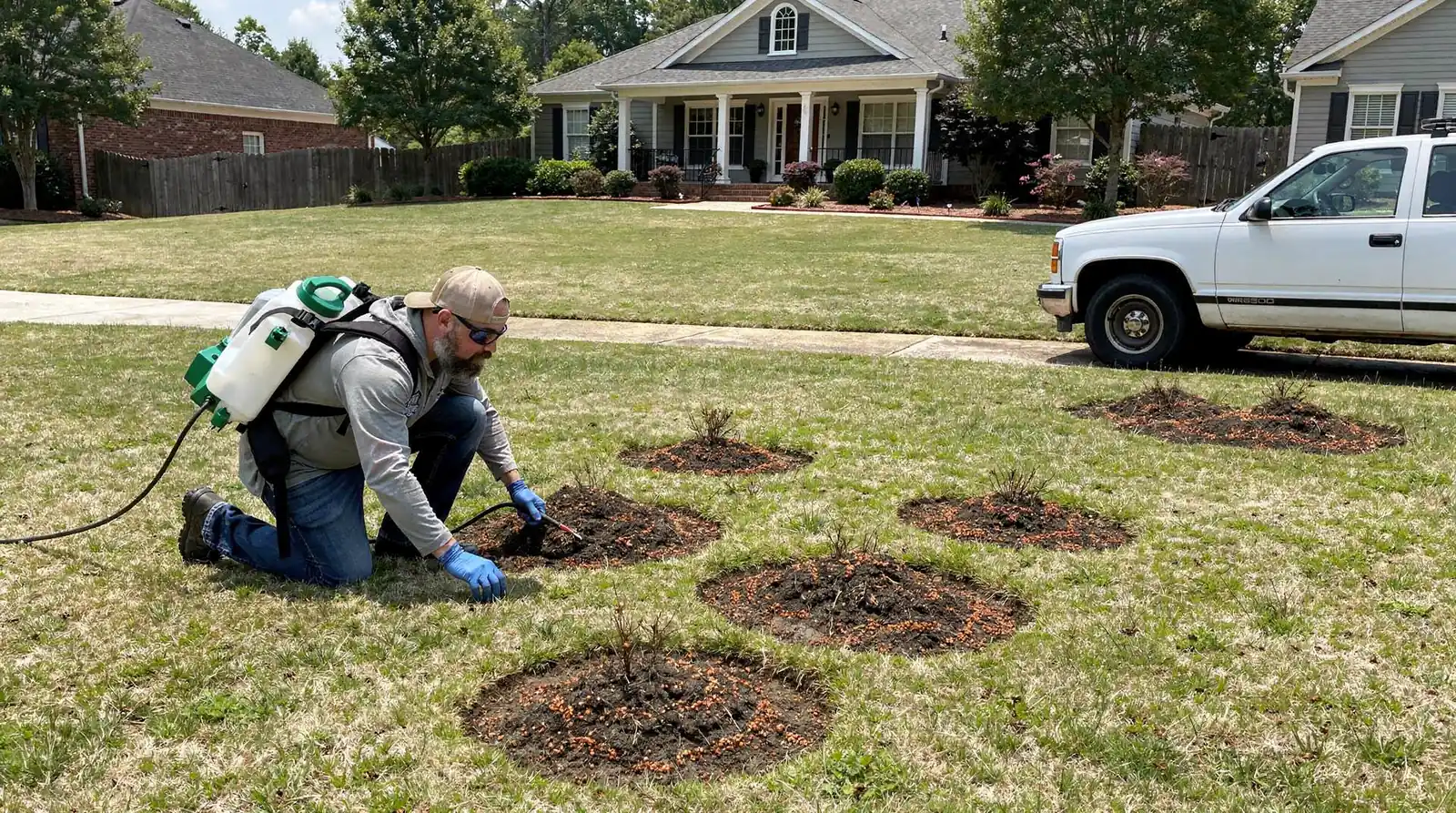
The method that actually works pairs two steps together. Lawn fire ant treatment Alpharetta properties need starts with a slow-acting broadcast bait spread across the entire lawn, letting worker ants carry it back to feed the queen. Individual mound treatment follows as a second pass, targeting the handful of mounds still active near patios, gates, or barn walkways.
Is Broadcast Treatment Enough on Its Own?
Broadcast bait alone often misses stubborn mounds sitting close to high-traffic areas like riding rings or pool decks. A follow-up mound treatment closes that gap, addressing colonies the broadcast pass may not fully reach.
Why Do Mounds Keep Reappearing After Treatment?
Mounds return when only surface colonies get treated instead of the full network below. Fire ant control Alpharetta GA requires reaching every colony, not just the visible ones.
For large lots, equestrian acreage, and pool-side turf, a fire ant exterminator North Fulton GA homeowners trust combines both methods, delivering coverage that spot treatment alone cannot match.
Why Does Zero Tolerance Matter Near Pools And Barns?
Bare feet on a pool deck and unshod hooves in a paddock share one vulnerability: no barrier between skin and a fire ant mound. High-use settings like golf greens, cemeteries, and elder care courtyards already treat fire ant mounds as unacceptable at any number. That same near-zero standard belongs on Alpharetta and Milton properties where children swim and horses graze. A single mound near a diving board or a mounting block turns a routine afternoon into an emergency room visit.
Fire ant control on estate-sized lots in Alpharetta demands more than a one-time spray. Persistent, intensive effort is what actually holds mound counts down over a season, not a single treatment applied in spring and forgotten by July. Large lots with wooded borders, pastures, and irrigated turf give colonies more territory to rebuild in, so the bar for effective lawn fire ant treatment in Alpharetta stays higher than it would on a small suburban yard.
Why Are Horse Properties Especially At Risk?
Equestrian operations face threats that mirror those documented on farms, groves, and golf courses. Paddocks, hay storage areas, and pasture edges all give fire ants room to establish colonies close to grazing horses. A startled horse near a disturbed mound can injure itself or a handler, making mound control a safety issue as much as a comfort one.
What Does Zero Tolerance Look Like In Practice?
Pool decks and patios checked before each swim season
Paddock perimeters and gate areas monitored monthly
Mounting blocks and tack areas kept mound-free year-round
A qualified fire ant exterminator in North Fulton, GA builds these checkpoints into a standing service plan rather than a reaction to the next mound spotted.
When Should You Schedule Fire Ant Treatment?
Late summer into fall marks the prime window for fire ant control alpharetta ga homeowners rely on most, especially after the region’s heavy August storms push colonies to the surface. Waiting until mounds reappear in a paddock or pool deck means the infestation already has weeks of underground growth behind it. Equestrian properties around Alpharetta face particular risk, since disturbed pasture soil and open pasture edges give colonies easy room to expand.
Milton and Alpharetta estates with sprawling lawns benefit from treatment timed to this fall baiting season rather than a reactive, mound-by-mound approach. A single visible mound rarely represents the whole colony; treating only what’s seen leaves the broader network intact underground.
How often should a large property be treated for fire ants?
Ongoing lawn fire ant treatment alpharetta programs work best on a seasonal schedule rather than a one-time visit. The objective stays simple: fewer mounds, fewer surprises, and a yard families can actually use without worrying about stings near a pool deck or paddock fence line.
Who should handle fire ant treatment on a large estate?
Acreage, equestrian fencing, and pool areas call for a fire ant exterminator north fulton ga families trust to map the full property, not just the front lawn.
Pool decks and patios where bare feet meet turf edges
Pasture and paddock zones near horse traffic
Perimeter beds bordering wooded lot lines
Covenant Pest Services, based in Acworth, GA, extends this seasonal approach to homes and estates across Alpharetta.
FAQ
Why do fire ant mounds appear suddenly after rain?
Heavy rain saturates the lower chambers of existing underground nests, pushing ants upward toward drier soil. Visible mounds rebuild across the lawn within a day or two of a North Atlanta storm.
Does a single mound mean there’s only one colony?
Rarely. A single visible mound usually represents just a fraction of the ants living below the surface. Colonies causing a mound surge were already established weeks or months earlier.
Why do large Alpharetta properties attract more fire ant mounds?
Wide lawns, equestrian pastures, and pool decks recreate the open, sun-exposed terrain fire ants originated in, giving colonies room to expand without competition from tree cover or dense shrubs.
Conclusion
In closing, fire ant control in Alpharetta requires a strategic approach that combines broadcast treatments with targeted mound applications—a comprehensive solution that protects your turf and family from these aggressive pests. By addressing both the visible mounds and the broader colony activity across your property, you gain lasting peace of mind and reclaim your outdoor spaces. Trust in thorough, honest pest management that treats your home as we would our own.